educacion.ca2m@madrid.org

educacion.ca2m@madrid.org

This summer, the museum is turning into a space designed to combat the heat just like it’s always been done: where it’s cool, with no hurry and in good company. Inspired by those perennial places where idleness is fine, this project is turning the museum into a summer refuge where you can simply exist. 
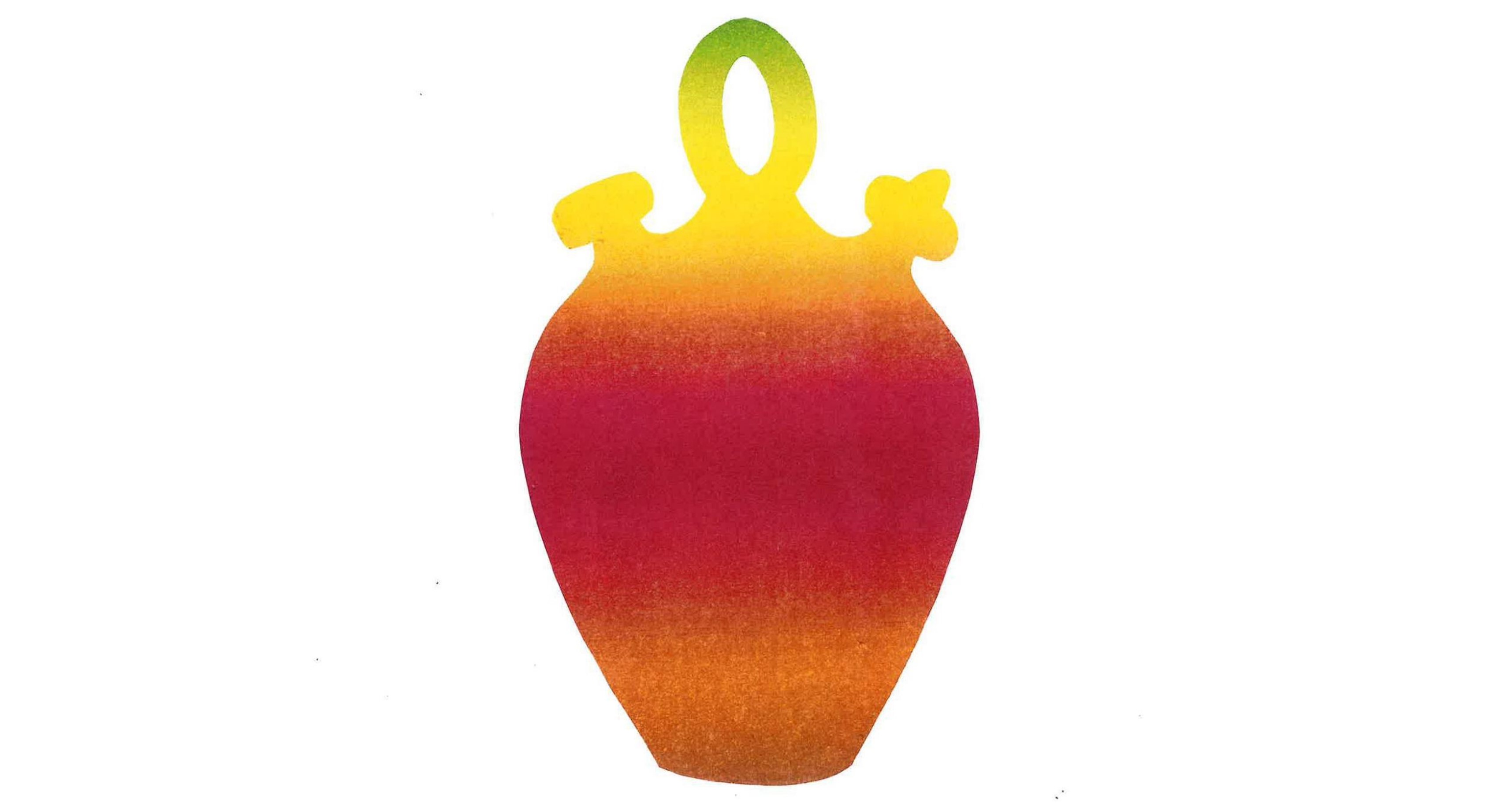
La Fresquera is a place where time stands still a little, where you can come read, play cards, talk… or simply do nothing. A place where the cool air is appreciated, like when you used to sit in your doorway in good company with a pitcher of water next to you.

La Fresquera isn’t an activity; it’s an attitude. It’s opening the museum’s doors to turn it into that courtyard, square or porch where you love to be. We’ve prepared a series of comfortable, quiet spaces full of plants where you can feel at home.

WATERING CAN INITIATIVE

From 3 July to 11 September, we want to create a plant-care network for people who are away on holiday.

Dates for dropping off your plants, from 6:30 to 8:30 pm:

  • Friday 3 July 
  • Friday 10 July 
  • Friday 24 July 
  • Friday 7 August 
  • Friday 21 August 
  • Friday 4 September 
  • Last day: 11 September 

*A form for the Watering Can initiative will be available soon.

This year, anyone who would like to can also play an active part in this collective care network through the Leaf It With Us initiative.

LEAF IT WITH US

We will hold a special session on Friday 26 June at 6.30 pm, where we will share some basic plant-care tips and organise how the care network will work.

KEEPING COOL

On the ground floor of the building, we will create spaces where you can come to read, play cards, chat… You can also enjoy our exhibitions, study in the library, spend some time on the terrace and discover a few other surprises that we will reveal as the summer unfolds.

Taking part in La Fresquera: Abundance Lab and Residents of Móstoles

Xisela García Moure is an educator specialising in agroecology, permaculture, urban gardening and sustainable food. A resident of Móstoles, her work focuses on promoting environmentally responsible practices and food sovereignty.

Marina Viñarás orbits and inhabits the realms of ecosystems, identity and neurodivergence. Her practice currently centres on landscape design, and she is a member of the collective donde continúan las cosas, through which she explores new ways of relating to the land.


Activity type
Dates
FROM JULY TO SEPTEMBER
Target audience
Topics
Entrance

This summer, the museum is turning into a space designed to combat the heat just like it’s always been done: where it’s cool, with no hurry and in good company. Inspired by those perennial places where idleness is fine, this project is turning the museum into a summer refuge where you can simply exist. 
Actividades asociadas
Subtitle
A MUSEUM FOR SUMMER
Categoría cabecera
FRESQUERA
LA FRESQUERA 2026
More information and contact
Is it a cycle?
Disabled

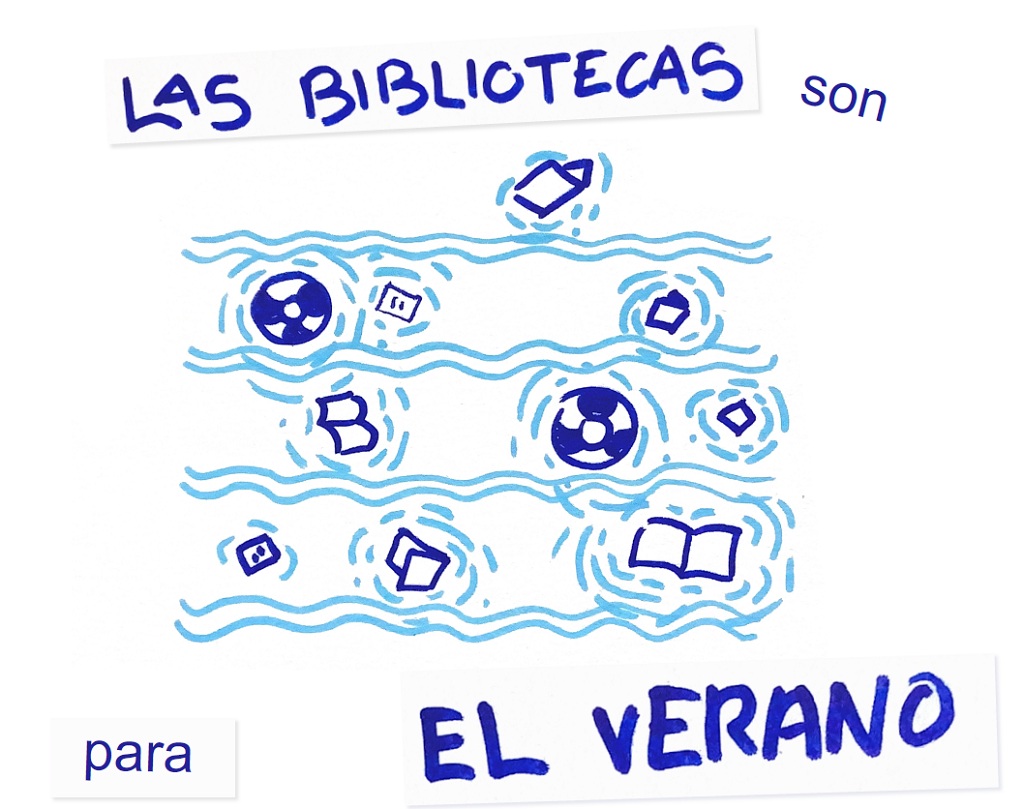
Reading books by the pool, a special summer edition, making books that can survive a day at the swimming pool, reading underwater, wearing diving goggles to read, a book for applying sun cream, a sudoku puzzle book, a book for fanning yourself, a book for topping up your tan, a book for looking intriguingly intellectual on the lawn, a book for shielding yourself from the sun...

What is a book? What is a library? What does it mean to publish? And does any of this have anything to do with summer? We think it does.

For four days, we will transform the museum and its surroundings into a laboratory for editorial creation and bibliographic reflection. We will explore the practice of making books, reflect on the relationship between books and summer, and collectively publish and create a small library to see us through the warmer months.

As we do every summer, we invite you to join this workshop led by Conchi Tabares and Iria Pero, two creators whose work centres on self-publishing and the fanzine universe.

Conchi Tabares (2000) is an artist, researcher and designer. Her work focuses primarily on reading as a hybrid concept that extends beyond literature into other formats, and on the ways literary forms are transformed when opened up to alternative modes of reading. Language, chance and attentiveness to everyday phenomena are among the elements that currently shape her practice. Since 2022, she has co-coordinated Pichi Fest, a self-managed transfeminist fanzine festival, together with fellow zinesters, and many of her zines can be found on her Instagram profile, @_conchipcion. She studied Fine Arts and Comprehensive Design and Image Management at Rey Juan Carlos University, and is currently completing an MA in Art Research and Creation at Complutense University of Madrid. 

Iria Pero (2001) is an arts mediator and visual artist. Iria's principal interest lies in working with discarded materials and exploring the notions of waste, residue and noise in contemporary culture through a variety of published formats. A graduate in Fine Arts from Complutense University of Madrid, Iria is currently studying for an MA in Contemporary Art History and Visual Culture. Iria publishes fanzines under the name Peromedapereza. Iria also regularly runs self-publishing workshops and keeps a small fanzine library inside a dollhouse. Currently, Iria coordinates Index(a)1.1, an amateur fanzine cataloguing group at the Marcablanca community library.


Activity type
Dates
29 JUNE - 2 JULY
Entrance

As we do every summer, we invite you to join this workshop led by Conchi Tabares and Iria Pero, two creators whose work centres on self-publishing and the fanzine universe.

Subtitle
SUMMER WORKSHOP FOR YOUNG PEOPLE
Categoría cabecera
taller verano jovenes
LIBRARIES ARE FOR THE SUMMER
More information and contact
Media footer

Image: Conchi Tabares and Iria Pero.

Is it a cycle?
Disabled
Duration
17:00 - 20:00

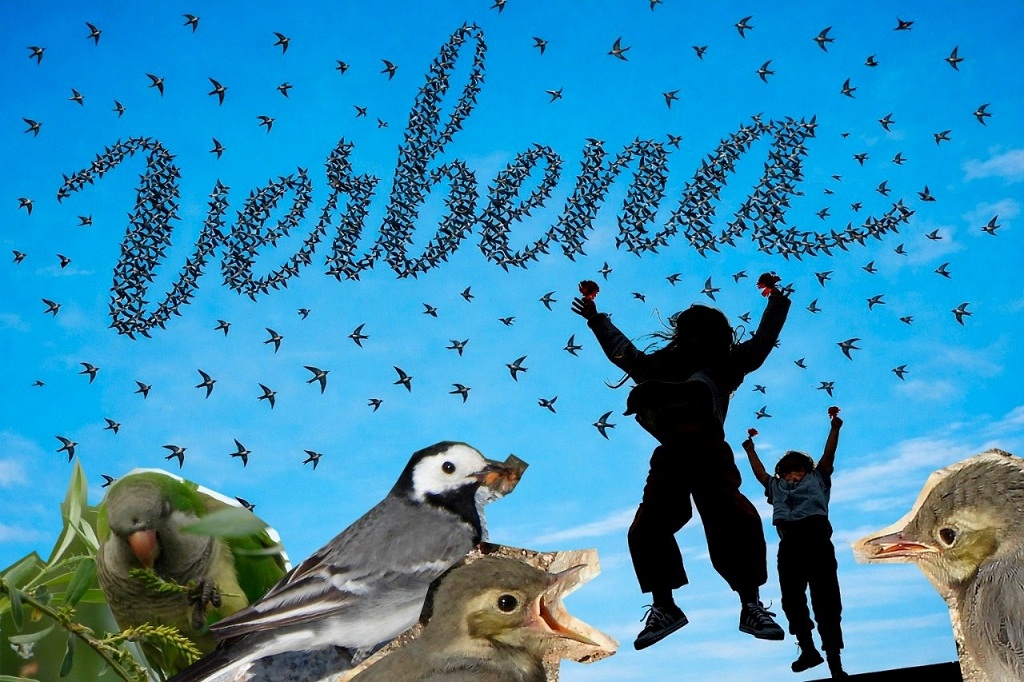
What would a verbena (summer fair) shared with the city's birds look like?

What if, for one afternoon, we stopped watching them from below and invited them to celebrate with us?

We invite you to come and find out for yourselves: to share the verbena with our winged neighbours. We will be joined by Lidia Toga, who will help us to discover more about the rich world of urban birdlife. She knows these inhabitants of the skies and rooftops inside out, and will help us to understand their ways of being, moving and gathering.

Perhaps we should begin by looking up. Swifts, forever in motion, trace a rapid, collective dance across the sky that sets the tempo. They may encourage us to move with them, to follow that impulse alongside the groups Bailar el barrio and Baivén, flocking together, occupying space and discovering that movement can also be a way of belonging.

Between flights, we will build our own nests, inspired by the communal weaver bird that visited the preschool and primary workshops alongsid Adriana Reyes y Goya Batalla. Together, we will create collective shelters: shared spaces like the huge nests of monk parakeets, those living structures where there is always someone nearby, company and someone with whom to share things.

And, like magpies, we will be drawn to all things shiny and bright. Small treasures may appear: bits of paper that catch the light, found objects, fragments whose meaning changes when viewed together. The verbena will be that, too: a chance to pause for a moment and see things from a different perspective.

If at any time we need to slow down, we can pause Pompa y las familias, who have been exploring ways of sharpening the senses: listening more slowly, looking more closely, observing that pigeon from the windowsill, following the magpie in flight, noticing how things change when we truly pay attention.

There will, of course, be a shared spread—delightfully chaotic and generously abundant, just as it should be. Crumbs here and there; food passed around, changing hands, appearing and disappearing; eating on two feet while life unfolds around us.

Join us on 13 June at 5.30 pm to flutter, flock and chatter together as we celebrate the end of the school year.

All kinds of birds, families, and creatures of the earth and sky are welcome.

This verbena will be guided as a collective flight by Lidia Toga, an artist specialising in illustration, painting and muralism; Baiven, the collective formed by the dancers, choreographers and cultural mediators Alba Sáenz-López Aumente and Mar Sáenz-López Aumente; with Adriana Reyes, an anthropologist and creator in the field of live arts; Gregoria Batalla Batalla, a teacher at Zaleo nursery school, historian and provocateur in the art of education; and POMPA, a collective project for cultural management, curating and artistic creation led by Mara Sannia and Irene Aguilera Martín, whose practices intertwine to shape a shared territory of listening, play and transformation.

Activity type
Dates
13 June
Target audience
Entrance

On 13 June, we’ll be celebrating the arrival of summer. We’d like to invite you to join us for this street party. What would a street party shared with the city’s birds be like? What if, for one afternoon, we stopped looking up at them and invited them to join in the celebrations?

Categoría cabecera
verbena 2026
FLOCKING TO THE FAIR: FLIGHTS, SHIMMERS AND SHARED TABLES
More information and contact
Media footer

Image: A monk parakeet, a wagtail and her chick enjoying a bite to eat beside the River Manzanares, as seen by Lidia Toga. Swifts cross the skies over Móstoles (AI-generated) while, on the rooftop of Museo CA2M, two girls leap into the air in an image by

Is it a cycle?
Disabled
Duration
17:30- 19:30

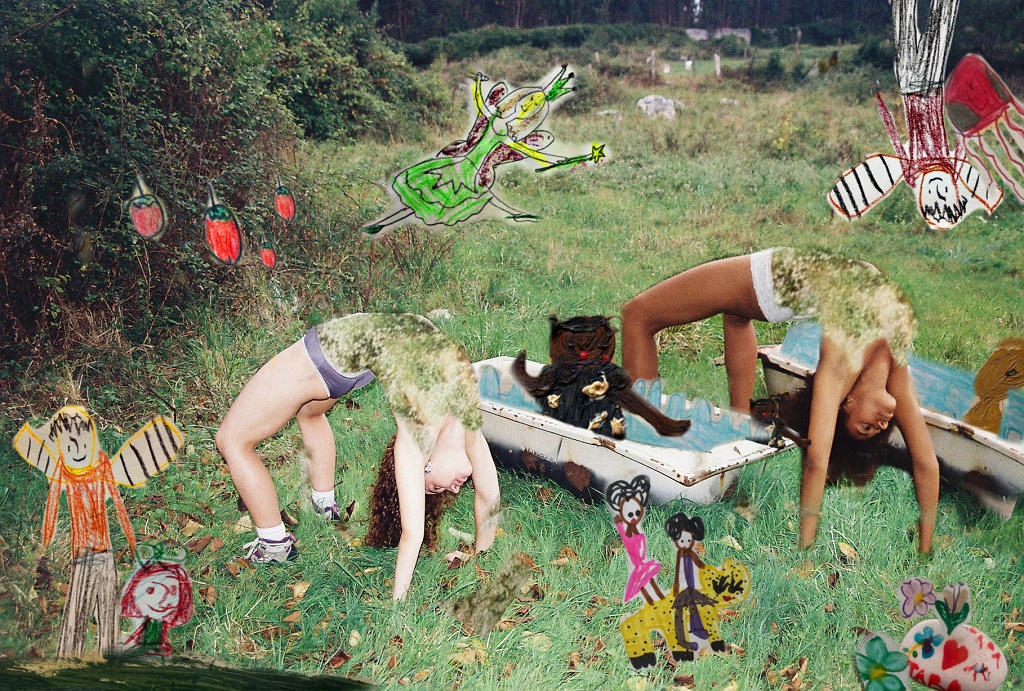
The Place of Unique Creatures will be a four-day summer workshop running from 30 June to 3 July for children aged 6 to 12 who would like to join us in imagining and creating a place of their own.

Sometimes we imagine bodies with wings, shimmering skin, enormous legs or the bodies of sea animals... Creatures that hide beneath stones, that sleep in caves, that crawl, float, leap or change shape. What if we could invent a being of our own? How would it move? What sounds would it make? What would it feel like to the touch?

The Place of Unique Creatures offers a space in which participants can explore using their bodies, movements and imaginations, discovering new sensations and new ways of being in the world.

As always, we will start from the idea of a shared refuge: an intimate space built together as an act of care and imagination in relation to the outside world. We want to think of these places as territories where we can invent alternative ways of living together and imagining collectively.

Through play, fantasy and shared adventure, we will set off on a journey towards new places and new possibilities. We will engage all five senses, bringing out the creature that lives inside each of us. Who says such creatures only exist in fairy tales? After all, isn’t the reality we inhabit magical enough in itself?

Along the way, we will create our own masks and use fabrics, paint and a range of materials to transform the space into a collective dreamscape where new forms of life and coexistence can appear. Through movement and theatrical creation, we will gradually compose a fantastical form of dance theatre populated by singular creatures.

Little by little, the group will build a living, dreamlike landscape: a community of unique creatures creating their own ecosystem, customs, hiding places and stories. A place where they can pretend to be something else and perhaps discover new ways of being together.

Chimenea de dos mujeres girando is a collective founded by Jara Arellano and Zoe Guidotti, artists and dancers who will facilitate the workshop through dance, bodily exploration and improvisation.

While dance lies at the heart of their practice, they see art as a hybrid territory where movement, literature, film, painting, photography and theatre coexist, nourishing their work and helping them to create distinctive worlds of their own. Their practice occupies a space bordering on play, imagination and collective creativity, eschewing academic conventions in favour of creating receptive spaces where the body can transform, invent and dream. Their principal aim is to make dance accessible to all and create safe environments where people can connect through freedom, attentive listening and the absence of judgement.

Activity type
Dates
30 June – 3 July
Target audience
Registration
-
Acceso notas adicionales

CAPACITY: 12 PEOPLE. REGISTRATION OPENS FROM

Entrance

The Place of Unique Creatures will be a four-day summer workshop running from 30 June to 3 July for children aged 6 to 12 who would like to join us in imagining and creating a place of their own.

Subtitle
CHILDREN'S SUMMER WORKSHOP
Categoría cabecera
CABAÑA VERANO
THE PLACE OF UNIQUE CREATURES.
More information and contact
Media footer

Image: A chimney with two women spinning.

Is it a cycle?
Disabled
Duration
11:00 A 13:30

Directed by: Carmen Aldama

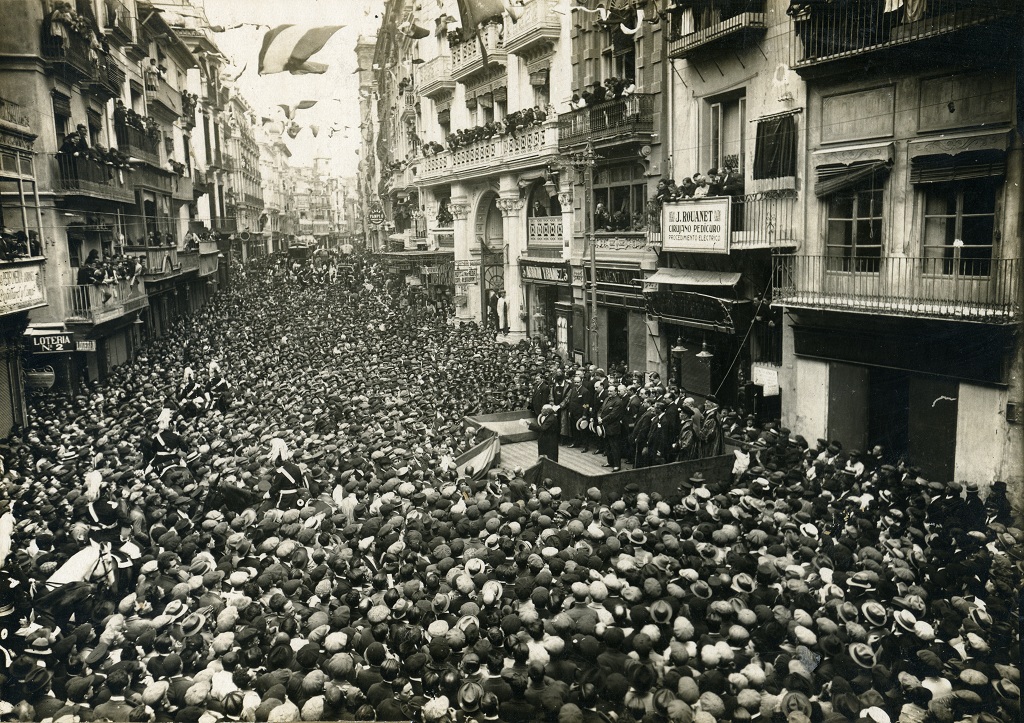
“A new terrain where everyone is welcome, where education dresses up in its finery and science is fun. Every night the Universidad Popular will become a type of free and free-of-charge theatre of education,” wrote Blasco Ibáñez in the newspaper El Pueblo in January 1903. Blasco Ibañez founded the first people’s university in Valencia, which drew far greater numbers of attendees than the students enrolled in the official university. Now, in the present, we fantasise with the idea that the attendees of the “theatre of education” challenged the authority of the well-meaning teachers, who were devoured by popular wisdom. The photograph would have been taken moments before the storming of the rostrum. 

Following model of adult education centres, since 2008 the Museo CA2M has been running the People’s University programme as a space to reflect on the nature of art today. Over the years, the lectures given by art history and philosophy academics have gradually incorporated other forms of learning based on artistic practice, and artists have been invited to share their working methods and processes. The People’s University attendees have always participated vigorously in the discussions and played an active role in the sessions with the artists, to the extent that they have ultimately become the protagonists of the lecture series. For that reason, the research topic for the 2026 edition of the People’s University is the actual learning group that emerges and flourishes around the programme. A group that is always varied, genuine and fluctuating. 

Over the course of five sessions, we’ll experiment with insubordination, anonymity, collective authorship, resistance, radical confidence, power, cannibalism and other heroic fantasies with which to unleash popular energy. 

PROGRAMME

  • Wednesday 22 April. THE ARTIST IS PRESENT. Javier Tirado Ocón 
  • Wednesday 29 April. SEASON FINALE. Cuqui Jerez
  • Wednesday 6 May. DEVOUR ME AGAIN. Aitana Cordero
  • Wednesday 13 May. TEACHING THOSE WHO DON'T KNOW. Carmen Aldama
  • Wednesday 20 May. GRAND FINALE. Ben Attia and María Moncada
Activity type
Dates
FROM 22 APRIL TO 20 MAY
Target audience
Registration
-
Acceso notas adicionales

Limited capacity

Entrance

Over the course of five sessions, we’ll experiment with insubordination, anonymity, collective authorship, resistance, radical confidence, power, cannibalism and other heroic fantasies with which to unleash popular energy. 

Subtitle
PEOPLE’S UNIVERSITY
Categoría cabecera
UP 2026
“THEN THE ATTENDEES CLIMBED ONTO THE ROSTRUM AND DEVOURED THE SPEAKERS”
More information and contact
Media footer

Blasco Ibáñez on Calle de San Vicente upon his arrival in Valencia. Ajuntament de València. Imagen: Arxiu Històric.

Is it a cycle?
Disabled
Duration
Afternoon session (to be confirmed)

At the start of each school year, we embark on a new artist residency project. This year, we will be joined by artist Lidia Toga, who will be working with the school’s two fourth-grade classes.

Every day, when break time ends, the playground at CEIP Federico García Lorca falls completely still. The children return to their classrooms and, for a brief moment, the playground is suspended in silence. That is when they begin to appear, one by one. They have been watching from the roof of the primary school building for some time, still but alert, as though waiting for a signal known only to them. Once the bell falls silent, they make their way down to the ground with purposeful steps, following the same choreography each day.

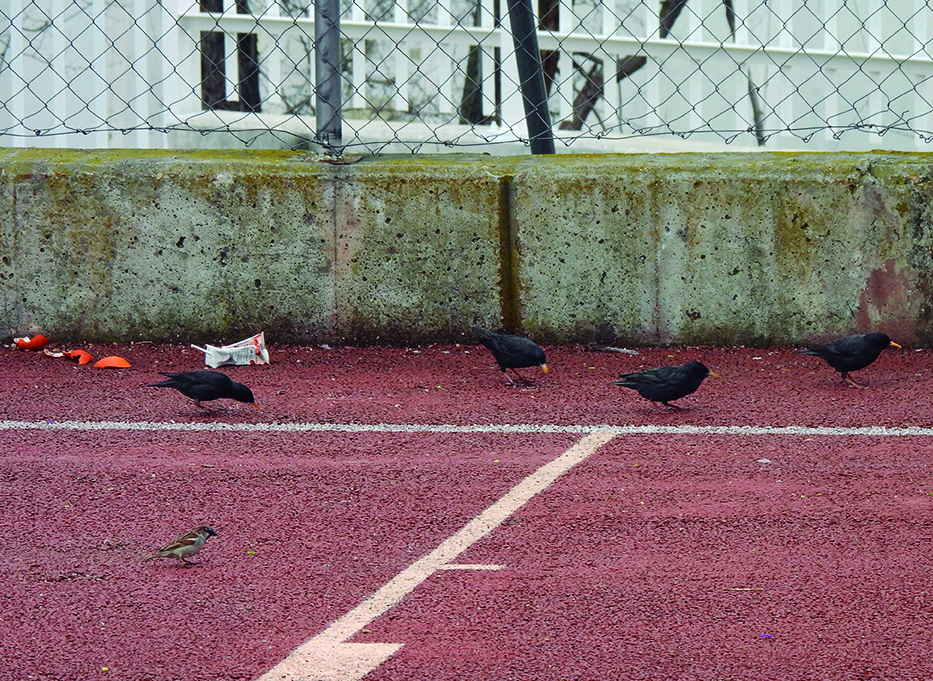
They approach the bins and carefully pull out biscuit packets, scraps of pastries and milkshake cartons. What the human creatures carefully placed in the bins during break time ends up scattered across the ground and turned into food. The school’s birds (magpies, wagtails, monk parakeets, pigeons, sparrows and starlings) feast while the children do multiplication and dictation exercises in their classrooms. This is how the birds find food in winter: by following the traces we leave behind.

This simple scene—a small, almost unnoticed gesture—is the starting point for the project we will share with Lidia Toga throughout the winter, spring, summer and autumn of 2026. Lidia walks slowly, letting her gaze linger where almost no one else thinks to look. She watches the birds patiently and draws them with the same care: every line is a way of listening to them, of learning how they inhabit the world. We want to take this everyday coexistence between people and birds—so close to us, yet so easily overlooked—as our starting point, and learn to observe it with greater responsibility and care.

The playground is a territory where many forms of life coexist, although the pace of the school day often leaves us little time to stop and notice them. We want to open up this space: to recognise those who inhabit it and help the children understand how our actions affect the cycles and needs of those who fly, walk or hide among the branches.

Lidia Toga (Madrid, 1980) is an artist specialising in illustration, painting and mural art, with a career spanning almost two decades. Since 2018, she has been researching biodiversity and the relationship between rivers and cities, building an extensive archive around the Manzanares and Río de Oro in Melilla. Her work has resulted in exhibitions, publications, works on paper and community projects, including a large-scale mural in Melilla. Since 2010, she has led workshops for children at venues including La Casa Encendida and schools, as well as in her own studio by the river. Her practice centres on interspecies coexistence and rethinking the place of humans within nature. She advocates careful observation and a reciprocal relationship with ecosystems and their inhabitants.

Entrance

As we do every academic year, we are launching a new artist-in-residence programme. This year we will be working with the artist Lidia Toga, who will be working with the two Year 4 classes.

Subttitle
Artist residency by Lidia Toga at Federico García Lorca infant and primary school (CEIP)
Header category
residencia FGLorca
THE CLASS FLEW BY
Media footer

Photo: Lidia Toga.

Type Thinking / Community
Topics Educational Community
Hide main image
Disabled
Topics
Is it a cycle?
Disabled

Have you ever stopped to think about how the bonds between people are manifested? Friendship, family and romantic relationships, needs and plans, desire... The emotional fabric is packed with feelings and concepts that become invisible lines leading and connecting us, constantly tightening and slackening, sometimes without us even noticing.

On this occasion we propose to enrich the research project Un juego de cuerdas y sus 12 leyes [A String Game and Its 12 Laws] with a collective game dynamic in which we’ll explore these and other bonds in a palpable, sensory way through knots and links.

We invite you to get tangled up with us and let go of the rope with the artist and researcher Inés Sorlat, who will use her practice to move the strings. Thus begins Intermittences, with the focus on what is there but might not always be there, on what is tightened but might also slacken.

Inés Sorlat (Madrid, 1993) is a multidisciplinary artist and Audiovisual Communication graduate of the Carlos III University in Madrid. Her work combines audiovisual narrative, installation and sewing, investigating the bonds between people and the invisible laws that uphold them. This exploration led to Un Juego de Cuerdas y sus 12 leyes, a series of twelve conceptual installations that reflect on relationships as a single interconnected system.

In 2025 she presented the first two pieces, Ley 8 and Ley 11, and she is currently developing the following works in the series, visually representing the system and its strings, and, one by one, reinterpreting their laws.

Donde Continúan las Cosas is a group formed by past participants of our programmes for young people, united by their interest in culture, art and community work. The project aims to redefine relationships with the museum, fostering the self-management of the group members and involving them in the definition of programmes for young people.

Activity type
Dates
UNTIL JUNE
Target audience
Acceso notas adicionales

CAPACITY: 15 PEOPLE.

Entrance

Donde Continúan las Cosas is a group formed by past participants of our programmes for young people, united by their interest in culture, art and community work.

Subtitle
OPEN WORKSHOP FOR YOUNG PEOPLE AGED 16 AND OVER
Categoría cabecera
dc las cosas
DONDE CONTINÚAN LAS COSAS: INTERMITTENCES
More information and contact
Media footer

Picture: Donde continúan las cosas

Is it a cycle?
Disabled
Duration
17:00 - 20:00

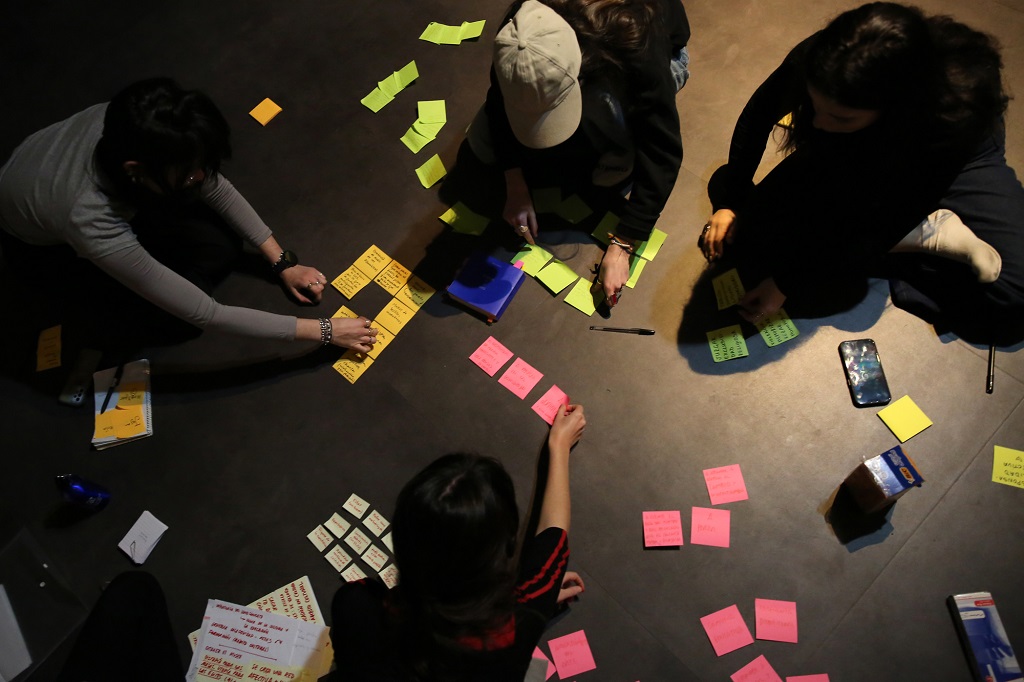
FUGA is a space where we continue to promote autonomy, exploration and collective undertaking. We don't impose anything here and there are no closed hierarchies: the group members design the programme together.

After a first year of sharing, experimenting and learning—a year of discovering how difficult but how rewarding it is to create a genuinely collective space—the group embarks on this new phase with a clear aim: to create their own podcast.

The podcast will be a tool for engaging with the museum’s programmes and exhibitions, but also for looking beyond them. It will enable us to map the contemporary art scene, interview artists and curators, visit spaces, chat with cultural agents and make our own voice heard in what is happening right now.

We want FUGA to be a place where we can continue adding to a collective archive, where we can explore current initiatives together, formulate theories, ask questions and continue to engage with the museum from the perspective of our own interests and languages.

We’ll meet twice a week during the year in a friendly, horizontal and experimental setting to design the podcast, record episodes, explore topics, invite people and create a project that is truly ours.

Activity type
Dates
SATURDAYS
Target audience
Entrance

After a first year of sharing, experimenting and learning—a year of discovering how difficult but how rewarding it is to create a genuinely collective space—the group embarks on this new phase with a clear aim: to create their own podcast.

Subtitle
GROUP OF YOUNG PEOPLE AGED 16 TO 23
Events
Categoría cabecera
Fuga 2026
FUGA 2026
More information and contact
Media footer

Photo: Sue Ponce.

Is it a cycle?
Disabled
Duration
ONCE A MONTH

The shelter, retreating to the shelter 
the cave, the cave
the sound box between the shelter walls
the acoustics of the drawings
there where it sounds
we’ve been here for eight years and never sung a full song 

Beyond the end we have never sung
of those lost to the river
from the river to sea
cocorococo

Beyond the urgency-attention
uncertain-subtle-unfinished-unspeakable-invisible
attention intention
being in the phase, in the 3rd phase, not of autonomy but of self-management 
corococo coco cocorococuuuuuuuu

Beyond a new gentleness
that must be invented 
becoming a body of affectations
a beast of a thousand heads with a thousand tongues
reemerges in the shelter of the cave


An amateur choir is a creative project in which any kind of voice is welcome to participate. Every other Thursday, we do our own research sessions as well as sessions with artists who work with voice and listening.

Session dates of An Amateur Choir 2026

15 January / 29 January / 12 February / 26 February / 12 March / 26 March / 9 April / 23 April / 7 May / 21 May / 4 June / 18 June / 1 October / 15 October / 29 October / 5 November / 19 November / 3 December / 17 December.

Those who have come in the past:

An Amateur Choir has featured Sonia Megías, Itziar Okariz, Jaume Ferrete, María Salgado and Fran MM Cabeza de Vaca, Rocío Márquez, Alma Söderberg, Ainara Lagardon, Jhana Beat, Juan G. Araque (Juan Dresán) and Lolita Versache, Luz Prado, Los Torreznos, Makiko Kitago, Julián Mayorga, Agnès Pe, Paloma Carrasco, Anto Rodríguez, Elisa C. Martín, Elena Murcia Pinto with Marina Peralta Murcia, Inma Marín with Jon Cañal and Tania Arias Winogradow with Milo-Andrey Ulises, Rolando San Martín, Amalia Fernández, Elena Córdoba, Raquel G. Ibáñez, Alex Reynolds, Black Tulip, tacoderaya, Mónica Valenciano, Ruth Abellán and Arturo Moya, Ojo Último, Monserrat Palacios and Fátima Miranda, Sole Parody, Enrico Dau Yang Wey, Coco Moya, Veza Fernández, Patricia Leguina, Jesús Burrola, Noela Covelo, Stina Force, Los Cramps (Nilo+Francisco), Ángela Segovia, Eddi Circa + raxet1, E1000, El Gato with Jotas, Nilo Gallego, Tavi Gallart, Hijas de Yocasta, Amaia Bono and Damián Montesdeoca, Piccola, Bea Narcoleptica and Elan d’Orphium.

Activity type
Dates
FROM JANUARY TO DECEMBER
Target audience
Entrance

An amateur choir is a creative project in which any type of voice is welcome to participate. Every other Thursday, we hold our own research sessions as well as sessions with artists who work with voice and listening.

Subtitle
IN THE SHELTER OF THE CAVE, THE CAVE...
Categoría cabecera
coro 2026
AN AMATEUR CHOIR 2026
More information and contact
Is it a cycle?
Disabled
Duration
17:00 - 20:00

MATINEES: EXPANDED CINEMA FOR FAMILIES 2026

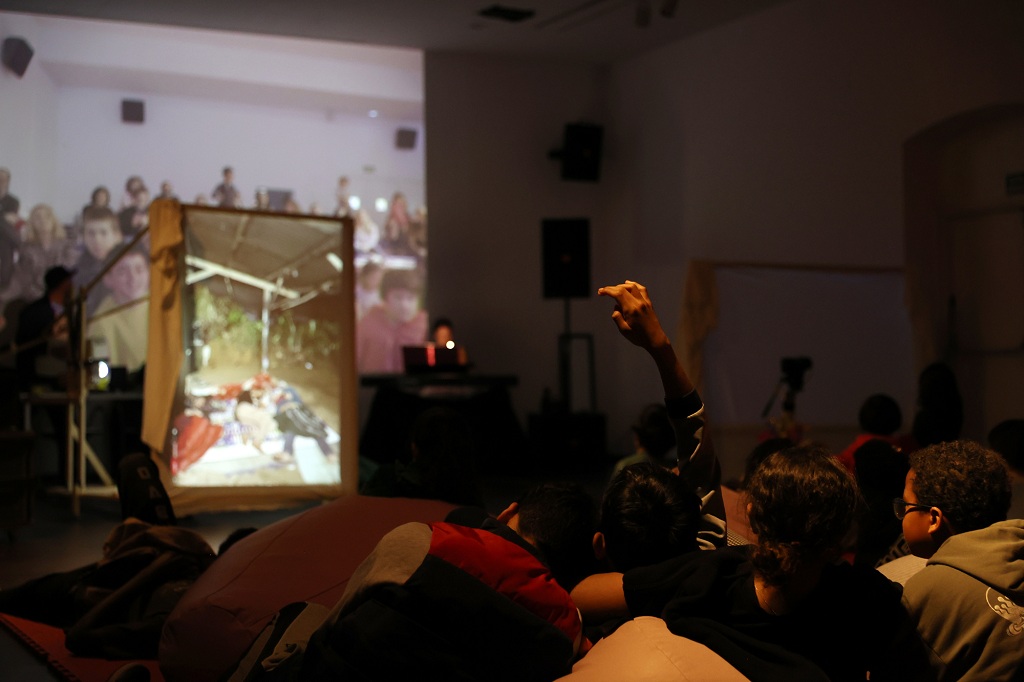
Matinees is an open, flexible space in which cinema expands: the cinematographic experience spills out of the screen and invites your active participation, regardless of your age.

The white cinema screen—that flat, opaque surface—is also a place to plunge into, to dive down to unsuspected depths. It can spill out of the sides, splashing and soaking everything around it, rising up to the ceiling and raining down from above. The images can adopt unimagined forms: unspeakable, immeasurable. We can watch them from a seat, or alternatively lying down, arm in arm, scattered across the room. Even with our eyes closed. We can touch the light, feel its colours, listen to it like a whisper, like a song. And we can do all of this together, in a room with no seats, no tickets and no popcorn. We believe there are many ways to watch cinema that have yet to be discovered. To explore them, we’ve invited various artists and filmmakers to imagine what those ways are and what other type of cinema has yet to be experienced. The Matinees take place on Saturday mornings and each session will be different: a proposal, an experiment, a challenging experience. We invite you to come with your best friends, your siblings, sons, daughters, dads, mums or grandparents and discover cinema like you have never imagined it. You’ll find all the details and session times here very soon, but for now here are the sessions dates and guests.

PROGRAMME 

28 FEBRUARY | MAIDER FERNÁNDEZ IRIARTE

7 MARCH | MARTA AZPARREN IN COLLABORATION WITH TANIA ARIAS WINOGRADOW

14 MARCH | GÉNESIS VALENZUELA AND MANUEL MUÑOZ 

21 MARCH | ANGIE DE LA LAMA

TIMES: 11.30 am** Time subject to change

Everyone is welcome at the Matinees. We want this programme to be a place for sharing, regardless of age. Babies, boys and girls, young people, adults and seniors: come and join us. You’re free to enter and exit the room during the sessions.

Activity type
Dates
SATURDAYS FEBRUARY-MARCH
Target audience
Acceso notas adicionales

AFORO: 60 PERSONAS

Entrance

Matinees is an open, flexible space in which cinema expands: the cinematographic experience spills out of the screen and invites your active participation, regardless of your age.

Categoría cabecera
matinales 2026
MATINEES: EXPANDED CINEMA FOR FAMILIES 2026
More information and contact
Media footer

Picture: Sue Ponce.

Is it a cycle?
Disabled
Duration
4 sessions