Activity

Activity

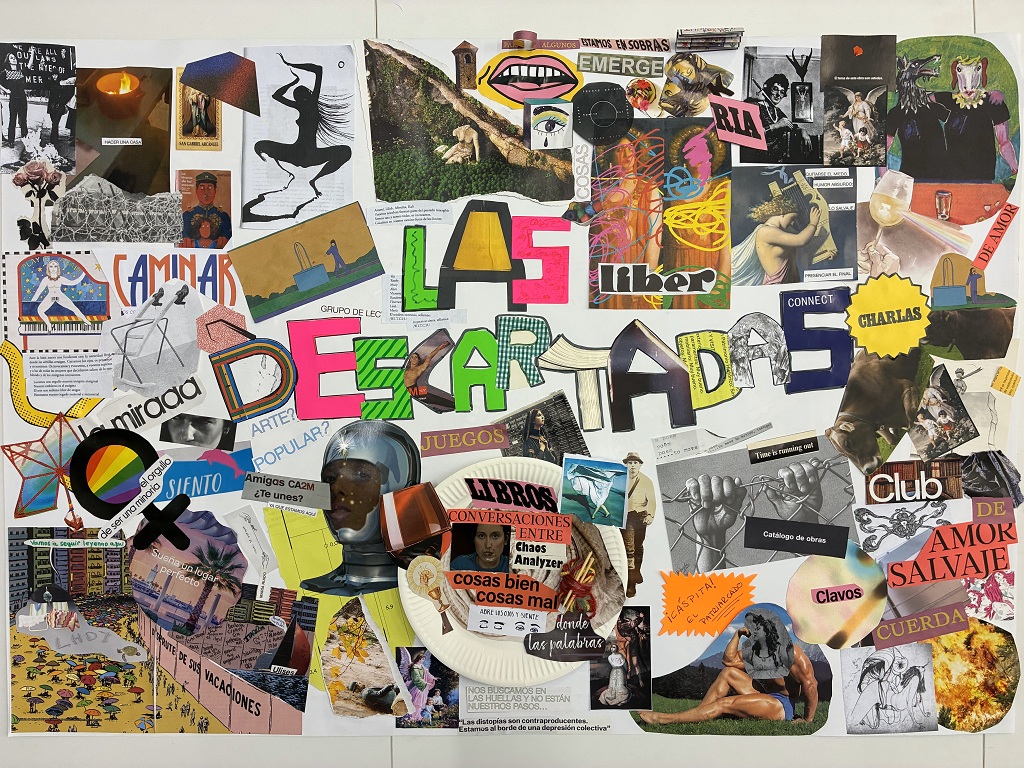
We make a collage. We cut things out. We stick them down. We choose. There are always pieces left over—scattered, discarded, excluded, set aside. Pieces that have no place in what we are doing, in the main work.

Fragments of an image that might have been, but never was. TO CUT OUT IS TO REJECT. Even the idea itself can be dismissed. We peer in, we look, and there it is: what seemed to have no use, until a clearing opens up in the woods. Now we know what we can do with it. We want to see what was rejected come back to life! We discover that being rejected or ruled out does not mean being waste; these pieces have simply been waiting to take on new meaning: to make visible the invisible—the hidden work, the hours lived, the thoughts harboured, the traces of what was not seen.

We spend our lives making decisions, choosing a path. Along the way, we meet other travellers and weave a network as we wander and meander through shared experience. But what about the paths we leave behind? Aren’t we defined as much by what we choose as by what we reject? Can we allow ourselves to retrace our steps?

Now that we are looking back, let’s give ourselves another chance. Not just to dream, but to act, and to rethink what we have experienced from a different perspective. We know that choosing means giving something up, and we don’t want to.

We want the margins, the pieces waiting in the wings and our gatherings for discussion. We want to keep walking, but steer clear of straight lines, beginnings and endings. We choose, yes, but knowing that whatever we leave behind today can be reconsidered tomorrow. We come together, rejected or not. We grow stronger by being and growing together. We want to make a beautiful collage where once there were only discarded pieces.

A collage that is always unfinished.

Las Hijas de Yocasta

  • The Reading Group is an independent research group initiated by the collective Las Hijas de Yocasta. It has become a regular fixture in the life of Museo CA2M. A place to stop, read, talk and collectively explore other ways of relating to ideas, texts, people and the institution itself.
  • Every two weeks, the group comes together to share readings, raise questions, exchange experiences and think about ways of being, doing and building together.
  • Participation is free and open to all. No previous knowledge is required—only curiosity, a willingness to share and a desire to be part of a community of learning and research.

PROGRAMME: 22 October / 12 November / 26 November / 10 December

Las Hijas de Yocasta 

Who are we? We are Las Hijas de Yocasta

We call ourselves Las Hijas de Yocasta because we like the name, because we are all daughters, and because Jocasta was Oedipus’s mother (and his wife), who caused him so much grief (and pleasure). We found the perfect excuse for the name in Christiane Olivier’s book Jocasta’s Children and made it our own. It’s ours. Four daughters. We are the resistance of Museo CA2M’s reading groups. But we’ve become more than where we started: we have a voice of our own now. Brought together by our love of talking and talking, and of endlessly turning things over, looking at everything from every possible angle.

Activity type
Dates
EVERY OTHER THURSDAY
Target audience
Topics
Entrance

The Reading Group is an independent research group set up by the collective Las Hijas de Yocasta. It is a regular feature of life at the CA2M Museum. A place to pause, read, discuss and collectively explore other ways of engaging with ideas, texts, people and the institution itself.
Categoría cabecera
grupo lectura
THE REJECTED. READING GROUP
More information and contact
Is it a cycle?
Disabled
Duration
17:00 - 20:00

Following the enthusiastic response to the spring edition, this autumn Museo CA2M returns with another edition of its long-running introduction to contemporary art, But… Is This Art?, with a new series of morning sessions. Designed as a space for exploring art through curiosity, dialogue and shared experience, the course draws on the spirit of the popular universities.

It is open to anyone who has ever stopped in front of an artwork and found themselves asking precisely that question: “But… is this art?” Over four sessions, we will explore some of the questions, ideas and experiences that can help us engage with contemporary art, discover some of the keys to understanding it and recognise how it is intertwined with our everyday lives.

For this edition, members of the Museo CA2M team will share the artworks, readings, encounters and experiences that have profoundly shaped their relationship with art—those that, at some point, changed the way they saw things, prompted a question or left a lasting impression. Each session will begin from a personal perspective before opening out into broader conversations about the ways in which art accompanies us, challenges us and helps us think about the world.

Over the years, the course has fostered a community around the museum, bringing together people from a wide range of backgrounds and with diverse interests who find here a space to think together. Each gathering thus becomes an open conversation in which questions circulate, experiences intersect and every voice brings a unique perspective. Taking part in the course means becoming part of this living space, where we learn from artworks and ideas, as well as by listening to one another.

The sessions will combine presentations of materials and ideas with opportunities for group discussion, encouraging an approach to contemporary art based on exchange, reflection and the collective construction of meaning.

A course for discovering art through the questions that move us, sharing ways of seeing, and together, continuing to build a learning community around the museum.

PROGRAMME:

  • 20 October: Vanessa Pollán. Head of Communications, Museo CA2M
  • 27 October: Estrella Serrano. Head of Education and Public Activities, Museo CA2M
  • 3 November: Gema Bayón, Ignacio Macua, María Teresa Bogajo. Exhibitions and Publications Department, Museo CA2M
  • 10 November: Ana Ballesteros. Deputy Director, Museo CA2M
Activity type
Dates
OCTOBER AND NOVEMBER
Target audience
Entrance

This course is aimed at anyone who has ever stood in front of a work of art and asked themselves precisely that: ‘But… is this art?’. It is a space designed to encourage people to engage with art through curiosity, dialogue and shared experience.

Actividades asociadas
Subtitle
INTRODUCTION TO CONTEMPORARY ART
Categoría cabecera
pero esto es arte otoño2026
BUT... IS THIS ART? AUTUMN 2026
More information and contact
Media footer

Photo: Sue Ponce.

Is it a cycle?
Disabled
Duration
TUESDAY 11.30 am – 1.00 pm

“Taking possession of space is the first gesture of living beings, of plants, of clouds and of {human beings}: it is a manifestation of duration, life and balance.”

Carlos Raúl Villanueva (1900-1975), architect.

Before the museum opens to the public and before all the lights are on, while silence still fills the galleries, our security staff open the doors so that preschool and primary school groups can be the first to enter.

They arrive slowly, shyly. But little by little, the museum begins to change. Voices replace the silence, questions fill the air and the galleries begin to come alive with new ways of looking and being.

What happens when a group of children has the chance to make the museum their own? What if their voices could make it theirs—a welcoming place that feels like home, like something of our own, as a public space should? What happens when a primary school group makes the rules for how to be and spend time in a museum? What if they create freely in response to what they discover here? What happens when the group moves through the galleries as if it were a single person, a single being with a movement all its own, invented by the group itself? What if laughter echoes throughout the space, disrupting its constant silence?

This activity invites the group to explore the museum through experience, imagination and collective creation. Through artistic activities, the children will discover the exhibitions as an open territory in which to investigate, experiment, encounter one another and formulate questions. A space to observe, listen, ask questions, reach agreements and try out new ways of relating to the works, to the group and to the museum itself.

The activity offers an active, sensitive and participatory approach to contemporary art. An opportunity for the children to take centre stage in the experience and to recognise how a child’s perspective can open up unexpected paths, transform the spaces they inhabit and enrich the ways in which we all inhabit the museum.

THE INTRUSION. Other Ways of Taking Over Space is the second artistic collaboration between Teresa Serigó and Lupe Estévez, who are beginning to find their feet as “Montañas Sánchez”, the name of the collective that gives shape to their way of seeing childhood through, from, alongside, with and by means of art. Their artistic careers share a spirit of exploration across the varied landscape of art. They enjoy combining theatre, sound, the power of light, words, gesture and movement with nature, drawing on all these disciplines and nuances to accompany children on the creative and emotional journey through life.

Activity type
Dates
FROM FEBRUARY TO JUNE 2027
Acceso notas adicionales

CAPACITY: 25 PEOPLE

Entrance

During these workshop-style visits, children will discover the exhibitions as an open space in which to explore, experiment, interact and formulate questions through artistic activities. The activity offers an active, sensitive and participatory approach to contemporary art. It is an opportunity for the pupils to take centre stage in the experience.

Subtitle
TOUR AND WORKSHOP FOR PRESCHOOL AND PRIMARY SCHOOL GROUPS
Events
Categoría cabecera
PRIMARIA 2027
THE INTRUSION. OTHER WAYS OF TAKING OVER SPACE
More information and contact
Is it a cycle?
Disabled
Duration
TUESDAY 10.30 am to 12.30 pm

Inspired by wild gardens and flowers that grow where no one expects them, this workshop invites families to create, imagine and experiment together. Session by session, we will create a world of our own where oddities, myths and the freedom to grow in our own way all have a place.

It used to be that gardeners would say: “If a tree grows crooked… its branches will never grow straight! You have to stake the branches, otherwise the roots can break through the concrete and take over the house.”

They would also say: “This place is full of weeds! You have to pull them up; you can’t let the garden run wild.”

What they did not realise was that it is among the weeds, in the tangled undergrowth, that fairies and the most fantastic insects live and myths are born.  

This workshop celebrates “growing crooked” as a way of growing freely, without constraints and at our own pace. It is about seeing the beauty in things that twist and tangle, stretching our roots out far and embracing our oddities.

For this florilegium, we are looking for the most unusual flowers, with drooping pistils, flowers that rebel against bouquets and flowerpots. “Ditch and roadside” flowers* that endure, spread and grow back when (and where) they are least expected, leaving a wild, voluptuous garden in their wake. *From La rebelión de los Ramos, a songbook by Juan de Salas.

Through drawing, projection and costume, we will embark on impossible botanical expeditions, become enchanting satyrs, witches or giant snails, reverse roles and, ultimately, occupy this topsy-turvy world, this home created by those who imagine it and inhabit it.

Throughout the workshop, we will develop a shared project that will take shape from one session to the next until it becomes a collective creation.

The programme will combine sessions with the artist Blanca Gracia with time to work in the museum classroom, which will be available to families wishing to continue exploring their ideas and developing their pieces independently between sessions.

SESSIONS

  • 10 October
  • 14 November
  • 12 December

This programme is conceived as a shared journey, so priority will be given to families who are able to join us for all the sessions. If places become available as the programme progresses, we will contact people on the waiting list who may still be interested in joining us.

PLEASE NOTE:  If there are younger children or even babies in your family, they are very welcome. We want this to be a space where families can come together and create together. The programme revolves around a creative process involving materials, drawing, paper, cut-outs and other hands-on activities. Everyone can take part in their own way.

BLANCA GRACIA (Madrid, 1989) has an artistic practice spanning drawing, video, installation and set design. Interested in myths, folk narratives and shared imaginaries, she creates spaces where fiction, memory and collective experience intersect.

Her work extends through collaborations with artists from different disciplines, giving rise to projects open to encounter, experimentation and collaborative creation. Her installation Antidotum tarantulae is currently on view on the third floor of Museo CA2M.

Activity type
Dates
FROM OCTOBER TO DECEMBER
Target audience
Acceso notas adicionales

CAPACITY: 25 PEOPLE

Entrance

Inspired by wild gardens and flowers that grow where no one expects them, this workshop invites families to create, imagine and experiment together. Session by session, we will create a world of our own where oddities, myths and the freedom to grow in our own way all have a place.

Subtitle
FAMILY WORKSHOP WITH BLANCA GRACIA
Events
Categoría cabecera
famlias 2026
FLORILEGIUM. THE MOST MARVELLOUS DITCH AND ROADSIDE FLOWERS.
More information and contact
Media footer

Image: Blanca Gracia, “Curious flowers”. Courtesy of the artist.

Is it a cycle?
Disabled
Duration
1 SESSION PER MONTH FROM 11.30 AM TO 1.30 PM

Where does a drawing begin and where does it end? Is it a line on paper or a way of thinking? A gesture of the body? A conversation? A way of being together?

Nadia Barkate and Fátima Moreno’s exhibition The List invites us to approach drawing as a living, undisciplined and open territory. A place where images do not always follow a predetermined plan, where bodies are transformed, stories intermingle and forms seem to emerge simultaneously from memory, imagination and desire.

This tour and workshop invites groups to explore the exhibition through observation, conversation and collective experimentation. We will look closely at the works, asking ourselves not only what they tell us, but also what lies beyond what they appear to be saying. We will explore drawing as gesture and thought in motion, as writing, imprint, play and a possibility for encounter.

Together, we will develop practices that allow us to listen to the unexpected, activate the imagination and discover what happens when drawing ceases to be merely a form of representation and becomes a shared action.

Because sometimes a drawing is not something we make, but something that happens.

We invited the artist Eva Garrido to help us develop this project. Eva is one of those artists capable of opening up spaces where imagination, listening and collective experience become tools for looking through a different lens. Her work moves between drawing, performance, writing and the body, exploring processes of collaborative creation in which what matters is not only the outcome, but everything that happens as we create together.

We think this workshop will be a wonderful adventure for those who visit us, and also for ourselves. A space to imagine together, allow ourselves to be surprised and continue creating.

We look forward to seeing you.

Activity type
Dates
FROM OCTOBER TO DECEMBER
Entrance

This tour and workshop invites groups to explore the exhibition through observation, conversation and collective experimentation. We will look closely at the works, asking ourselves not only what they tell us, but also what lies beyond what they appear to be saying. We will explore drawing as gesture and thought in motion, as writing, imprint, play and a possibility for encounter.

Subtitle
VISIT OF NADIA BARKATE AND FÁTIMA MORENO’S EXHIBITION “THE LIST”
Categoría cabecera
secundaria 2026-27
TOUR AND WORKSHOP FOR SECONDARY AND UPPER SECONDARY SCHOOL GROUPS
More information and contact
Media footer

Photo: María Eugenia Serrano

Is it a cycle?
Disabled
Duration
WEDNESDAY 11.00 am to 1.30 pm

The Real Ballet of the Museo CA2M was officially established on 20 June 2026, in Móstoles. Comprising some 27 dancing bodies, with no distinctions made on the basis of age, body or health, and based at the Museo Centro de Arte Dos de Mayo of the Community of Madrid, the company takes dance as its primary—but by no means exclusive—language. The world, its people and its spaces become stages on which to celebrate encounters, crossings and contagions.

We take note of its journey so far and announce its continuation, in the hope of expanding the horizons of the here and now, awaken new possibilities and discover collective ways of dancing that revolutionise reality.

If you are over 16 and would like to be part of a community that comes together around dance and performance practices; if you are open-minded about what dance and dancing can—or cannot—be; if you want to experiment with and explore the richness of movement, whether in the street or on stage; and if you are not afraid to be seen trying out new things you have not quite mastered… then the Real Ballet of the Museo CA2M is your dance company!

PLEASE NOTE: The group is currently full. If any places become available, they will be announced on this webpage.

Oihana Altube is a dancer and artist whose practice occupies the margins between dance, live arts and psycho-physical (therapeutic) practices. Her work explores dancing as a force for personal and social transformation and draws on academic dance.

Javier Vaquero is a choreographer, cultural manager and teacher with an international career in contemporary dance and transdisciplinary creation. Her work explores the body as a site of knowledge, resonance and narrative, investigating the relationships between movement, language and identity from a queer and situated perspective.

DATES

  • 24 October 
  • 7 and 21 November
  • 12 and 19 December
  • 16 and 30 January
  • 13 and 27 February
  • 13 March
  • 3, 10 and 24 April
  • 8, 22 and 29 May
  • 12 June    


Estos son algunos de los rastros que han quedado del proceso de constitución del Real Ballet del Museo CA2M a lo largo de los meses que van entre enero a junio 2026:

Real: cuerpazos de baile: vidas reales

El Museo como casa: un museo “pista de baile” y su comunidad de vecinas

Comunidad de “grupo”, 

no comunidad de comunidad autónoma

En las pausas: mandarinas y galletas príncipe. Un cigarrillo

En las prácticas: ¡cuidado con el hámster!

Escoge a una persona y síguela 

¿pero que esté viva o muerta?

  • La fisicalidad del otro / abrirse a otros cuerpos.
  • El asombro.
  • Las presentaciones ayudan.
  • Bailar entre ellas: joven / mayor.
  • Conexión, tacto.
  • No hay cansancio.
  • Es desconocido ¿Qué queréis de nosotras?
  • ¿Hasta dónde vamos a llegar?
  • Personas juntas pero diversas.
  • Percibir la abertura. Que el cuerpo se expanda.
  • Conocer gente nueva.
  • Estar conmigo y estar con otros.

Mi piel

La piel de las cosas

El espacio entre las pieles

El espacio es piel

¿Cómo es ver desde las manos?

viento / algas / mono / alegría / rojo / Dorothy Iannone

¿Cómo se convierte tu cuerpo en la obra?

historia / poderío / púbico / misterio / identidad / juego / estrellas / brilli-brilli / independencia / 

fortaleza / vulvas / placer / colorido / misterio / fraternidad / rompedora / libertad / emoción /

sentado / erotismo / curiosidad / imaginación / fuerza / cooperativismo / camastro / vivos / pasado

Activity type
Dates
FROM OCTOBER TO JUNE
Target audience
Acceso notas adicionales

Registration is open from 21 September to 4 October

Entrance

A company that embraces all forms of movement and being, without any physical or technical requirements. A stable group that explores, experiments with and shares dance through the everyday, the sensory and the collective.

Subtitle
WITH OIHANA ALTUBE AND JAVIER VAQUERO
Categoría cabecera
REAL BALLET
REAL BALLET OF THE MUSEO CA2M
More information and contact
Media footer

Photo: Sue Ponce.

Is it a cycle?
Disabled
Duration
SATURDAYS 11.00–14.00

Dancing the Neighbourhood is an after-school activity for children aged 6 to 12, held on Tuesday afternoons at Museo CA2M.  A space for moving between ideas, improvising, taking shortcuts, changing direction, looking closely and finding a thousand other ways to move with the museum, the neighbourhood and everything that happens in between.

Can a city be danced? Can a museum shake, sway or slide a little out of place? What happens when we move between screens, classrooms, corridors, squares and unexpected encounters?

These are some of the questions that will accompany Dancing the Neighbourhood, our Tuesday afternoon after-school activity at Museo CA2M throughout the 2026–2027 school year.

In this small community, there is room for curiosity, detours and unexpected ideas. A place to try things out, change our minds, look closely, make decisions together and discover what happens when we move as a group.

This year, we will once again explore the museum and its surroundings, ready to take a second look at things that seem familiar. We will glide through galleries, corners, streets and squares, paying attention to what moves, what remains and everything that emerges in between, while approaching art as a tool for asking questions, imagining other futures, unsettling certainties and building knowledge together.

Over the year, we will cross paths with artists who will share their interests, questions and ways of working with the group. Each encounter will bring new points of reference, new games and different ways of approaching what we do. It will also open up new ways of understanding the body, creativity and dance, enriching our shared journey with different perspectives.

Dancing the Neighbourhood is an after-school activity for children aged 6 to 12, held on Tuesday afternoons at Museo CA2M. A space for moving between ideas, improvising, taking shortcuts, changing direction, looking closely and finding a thousand other ways to move with the museum, the neighbourhood and everything that happens in between.

Throughout the school year, some sessions will also be open to family and friends. These sessions will offer a glimpse into what happens each week, with opportunities to take part in some of the activities and experience first-hand the ideas, questions and discoveries that unfold over the course of the year.

The activity will be led by Baivén, a cultural mediation collective that uses the performing arts to encourage the sharing of experiences, perspectives and knowledge on an equal footing, while fostering critical thinking.

You can sign up at any point during the school year. Places are subject to availability, and we will be delighted to welcome you whenever a place becomes available.


Activity type
Dates
FROM OCTOBER TO JUNE
Target audience
Entrance

Dancing the Neighbourhood is an after-school activity for children aged 6 to 12, held on Tuesday afternoons at Museo CA2M.  A space for moving between ideas, improvising, taking shortcuts, changing direction, looking closely and finding a thousand other ways to move with the museum, the neighbourhood and everything that happens in between.

Subtitle
AFTER-SCHOOL DANCE AND MOVEMENT WORKSHOP
Categoría cabecera
bailar el barrio
DANCING THE NEIGHBOURHOOD
More information and contact
Media footer

Photo: Sue Ponce.

Is it a cycle?
Disabled
Duration
17:30 - 19:00

At the start of every academic year, Museo CA2M opens the new season with its Performance and Education Workshop, a space for learning, exchange and research aimed at teachers, artists, mediators, cultural workers and anyone interested in the relationships between education, culture, territory and artistic practice.

The workshop marks the beginning of a conversation that we hope will accompany us throughout the year. A space to share questions, try out methodologies and begin to identify some of the concerns that will run through our programmes and projects. A time for collective reflection on how we inhabit educational and cultural spaces and how we relate to the social, institutional, material and ecological environments that sustain them.

This workshop invites us to collectively explore the poetics and politics of negotiating atmospheric and climate-related fears, through the analysis of administrative and archival texts and the ways they are preserved and catalogued. We will explore how we name, classify and manage what we perceive as threats and sources of uncertainty: heat, floods, drought and hailstorms. Through exercises in reading, rewriting and giving voice to documents from a more or less distant—or more or less recent—past, we will explore the poetics of the languages of bureaucracy, religion, magic and technology, delving into their inner workings and navigating our own contradictions.

Led by Mariona Moncunill, artist, educator and researcher. Her artistic practice typically responds to the specific context in which it takes place, exploring how symbolic value is created and the epistemological sediments that shape contemporary social and cultural conventions. In this way, she has explored different fields of knowledge, including botany, museography, library science and the measurement of time and length. In recent years, she has focused much of her work on exploring the social construction of nature through specific case studies, whether institutions, social practices or particular territories.


Dates
22–25 SEPTEMBER
Entrance

We are kicking off the academic year with the Performance and Education Workshop, a space for training, exchange and research aimed at teachers, artists, cultural mediators and cultural workers, as well as anyone interested in the relationships between education, culture, the local area and artistic practice.

Subtitle
PERFORMANCE AND EDUCATION WORKSHOP
Categoría cabecera
piedra rayo
IN EXCHANGE FOR BREEZES AND DEW
More information and contact
Media footer

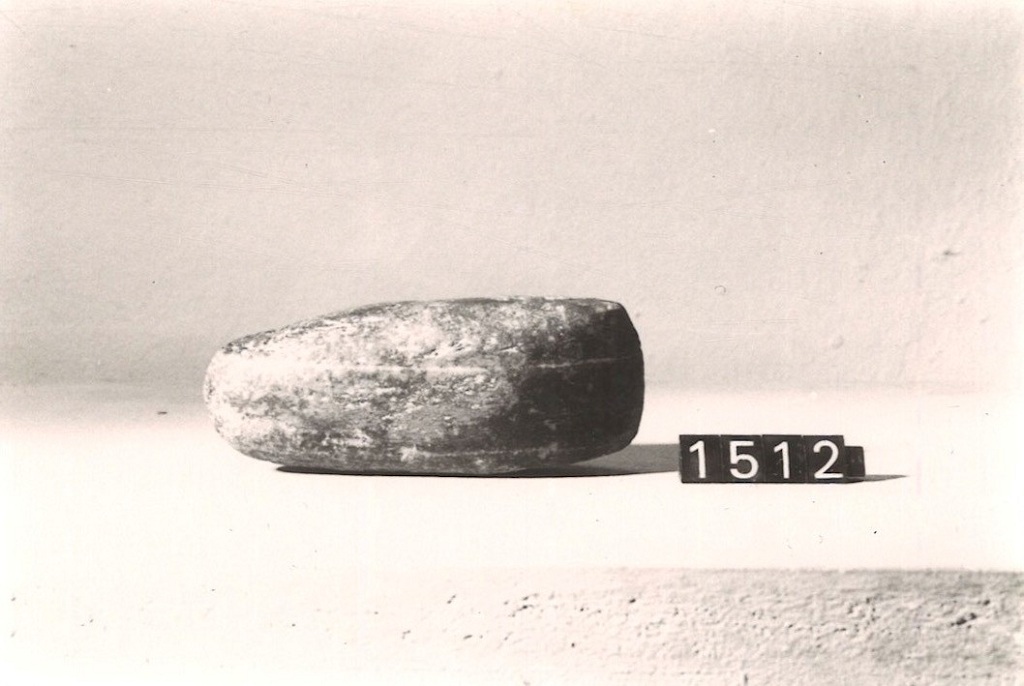
Image: Thunderstone from the Museu de la Garrotxa.

Is it a cycle?
Disabled
Duration
17:00 - 20:00

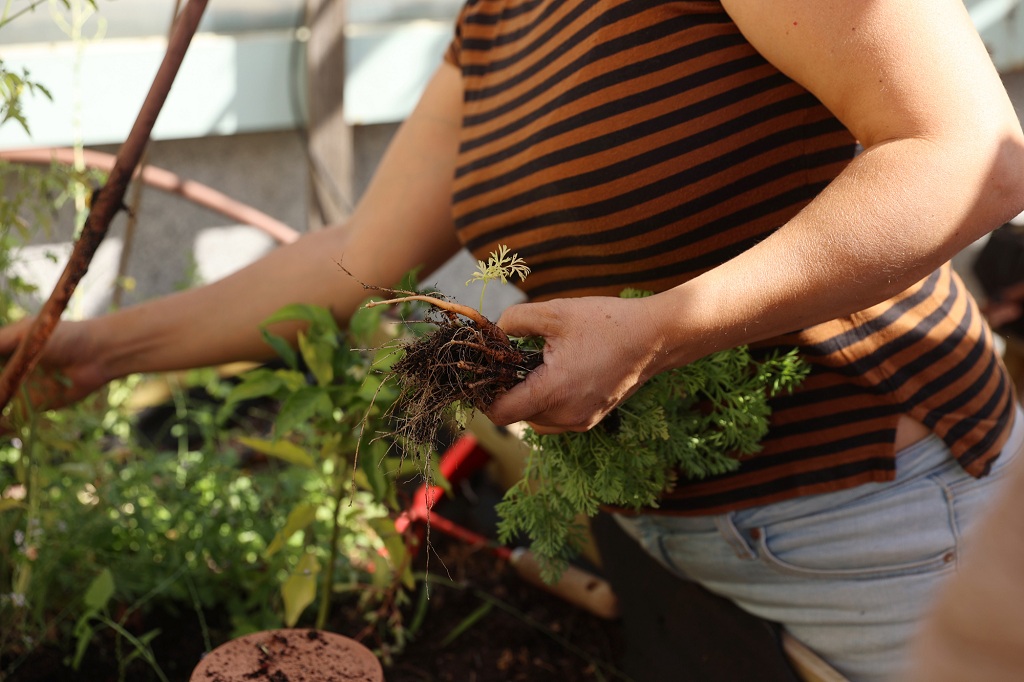
Every Friday morning, a group of people comes together at the museum around a simple excuse: tending a garden. But, as with the best excuses, it is about much more than the plants.

The garden is a place to learn, share experiences and pay attention to what needs care in order to grow. Sometimes the conversation turns to seeds, cuttings or how to rescue a plant that seems to be having a hard time. Other times, people swap tips, kefir recipes, questions and ideas, or simply share the desire to do things in the company of others. Participants look after the garden on the museum terrace, observing the changing seasons and rising to the challenges each one brings. When the irrigation system fails, pests arrive or the soil dries out too quickly, there is always someone with experience to share or a helping hand to offer. There are also worms to feed, seedlings to start, soil to improve and visitors to welcome when they come to find out more about the project. If the garden teaches us anything, it is that many of the things that matter take time, attention and care.

The museum garden is a place where very different people, experiences, forms of knowledge and ways of doing things can coexist. It is a space that leaves room for the unexpected, where not everything goes according to plan. Sometimes shoots appear where no one expected them; at others, it is ideas, lessons learnt or chance encounters that end up taking root.

You can join the sessions at any point during the academic year. On Friday mornings, you might find the group gathered in the library, working in the raised beds on the terrace or perhaps visiting somewhere that inspires them to keep learning. We look forward to seeing you.

Activity type
Dates
EVERY FRIDAY
Target audience
Topics
Entrance

Every Friday morning, a group of people gather at the museum under a simple pretext: to tend a vegetable patch. But, as with the best pretexts, it goes far beyond just the plants.

Categoría cabecera
huerto
TERRACE GARDEN
More information and contact
Is it a cycle?
Disabled
Duration
FROM 11.30 TO 1.30

One Thursday afternoon a month, we come together around a shared fascination: the moving image. Sometimes the excuse is to pick up a camera. Other times, it is to talk about the latest film we have seen, or that scene that suddenly comes back to us because someone said something that brings it to mind. Through conversations, screenings and hurried notes scribbled in a notebook, we gather ideas, questions and discoveries that seem too important to let slip away. Some quickly find their form; others need more time, resurfacing when we least expect them.

This group is a space for thinking collectively about film and education. We share references, develop ideas and put our intuitions to the test. We often bring along ideas we would like to try out in our classrooms or educational projects, looking for a space where we can experiment with them before putting them into practice. We also find time to produce our own audiovisual work, something that is not always easy amid classes, meetings and assessments.  

Because sometimes we need to stop, look and return to what continues to spark our curiosity: images and stories. Within the group, ideas circulate through conversations, films, readings and shared experiences. As in cinema, we work at different tempos: some ideas take shape straight away, while others need to wait, mature and find the right moment to reemerge. Throughout the academic year, we will invite artists and filmmakers to share their creative processes, introduce us to different ways of working and open up new conversations.

You can join the group at any point during the academic year. Fill in the form and we will let you know about upcoming sessions. If you are interested in film, audiovisual creation or the educational possibilities of the moving image, this is the place for you.

Dates
OCTOBER TO JUNE
Target audience
Registration
-
Acceso notas adicionales

REGISTRATION OPENS ON

Entrance

One Thursday afternoon a month, we come together around a shared passion: the moving image. Throughout the course, we will invite artists and filmmakers to share their creative processes, explore different ways of working and spark new conversations.

Categoría cabecera
De 5 a 7
FROM 5 TO 7. WORKING GROUP ON AUDIOVISUAL MEDIA AND EDUCATION TEACHER TRAINING
More information and contact
Media footer

Picture: Sue Ponce

Is it a cycle?
Disabled
Duration
From 5pm to 7pm