Education

Education

Triggering impulses, working in an experiential way, promoting critical attitudes through action, involving the body in learning processes ... These educational practices, in tune with the centre’s educational philosophy, are based on the construction of knowledge through experience. Thus, the exhibition’s performative routes focus on the spectator's experience and turn their gaze towards current art. In this way, we create meeting spaces in which to experiment and construct critical discourse regarding contemporary work. 

At this time, we wish to invite you to visit two of CA2M’s exhibitions with us.
On Saturdays at 6:30 PM we propose visiting TRÉMULA, artist Javi Cruz’s exhibition, together. And on Sundays at 12:30 PM, VEROÍR EL FRACASO ILUMINADO (EXPERIENCE THE ILLUMINATED FAILURE) by the artist Cecilia Vicuña. There will be a maximum of 6 people.

To sign up, write to educacion.ca2m@madrid.org or call 91 276 02 21. You can also come directly to the museum and, if there are not too many of us, join the tour by leaving your details at reception. We take all of these measures in order to take care of ourselves and to take care of you, though we are aware that these measures may change according to the situation. We look forward to meeting up with you again.

Activity type
Dates
Saturdays and Sundays
Target audience
Registration
-
Entrance

Triggering impulses, working in an experiential way, promoting critical attitudes through action, involving the body in learning processes ... These educational practices, in tune with the centre’s educational philosophy, are based on the construction of knowledge through experience.

Categoría cabecera
recorridos performativos
Performative routes 2021
More information and contact
Media footer

Foto Sue Ponce

Is it a cycle?
Disabled
Duration
Every weekend until the closing of the exhibitions
Biografías

Directed by: Carmen Aldama

“A new terrain where everyone is welcome, where education dresses up in its finery and science is fun. Every night the Universidad Popular will become a type of free and free-of-charge theatre of education,” wrote Blasco Ibáñez in the newspaper El Pueblo in January 1903. Blasco Ibañez founded the first people’s university in Valencia, which drew far greater numbers of attendees than the students enrolled in the official university. Now, in the present, we fantasise with the idea that the attendees of the “theatre of education” challenged the authority of the well-meaning teachers, who were devoured by popular wisdom. The photograph would have been taken moments before the storming of the rostrum. 

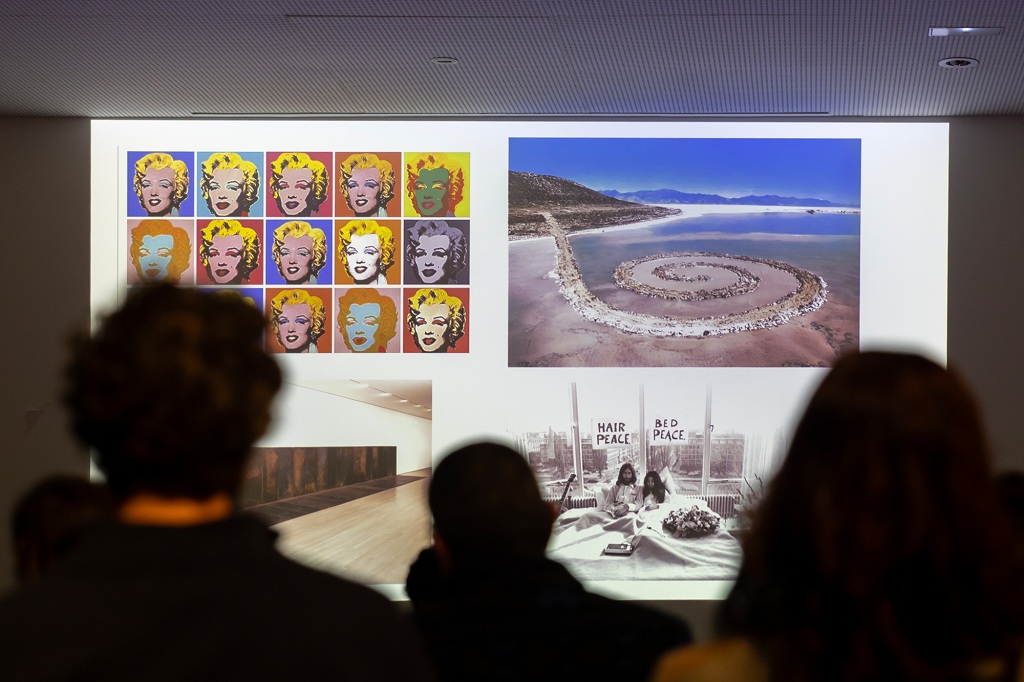
Following model of adult education centres, since 2008 the Museo CA2M has been running the People’s University programme as a space to reflect on the nature of art today. Over the years, the lectures given by art history and philosophy academics have gradually incorporated other forms of learning based on artistic practice, and artists have been invited to share their working methods and processes. The People’s University attendees have always participated vigorously in the discussions and played an active role in the sessions with the artists, to the extent that they have ultimately become the protagonists of the lecture series. For that reason, the research topic for the 2026 edition of the People’s University is the actual learning group that emerges and flourishes around the programme. A group that is always varied, genuine and fluctuating. 

Over the course of five sessions, we’ll experiment with insubordination, anonymity, collective authorship, resistance, radical confidence, power, cannibalism and other heroic fantasies with which to unleash popular energy. 

PROGRAMME

  • Wednesday 22 April. THE ARTIST IS PRESENT. Javier Tirado Ocón 
  • Wednesday 29 April. SEASON FINALE. Cuqui Jerez
  • Wednesday 6 May. DEVOUR ME AGAIN. Aitana Cordero
  • Wednesday 13 May. TEACHING THOSE WHO DON'T KNOW. Carmen Aldama
  • Wednesday 20 May. GRAND FINALE. Ben Attia and María Moncada
Activity type
Dates
FROM 22 APRIL TO 20 MAY
Target audience
Registration
-
Acceso notas adicionales

Limited capacity

Entrance

Over the course of five sessions, we’ll experiment with insubordination, anonymity, collective authorship, resistance, radical confidence, power, cannibalism and other heroic fantasies with which to unleash popular energy. 

Subtitle
PEOPLE’S UNIVERSITY
Categoría cabecera
UP 2026
“THEN THE ATTENDEES CLIMBED ONTO THE ROSTRUM AND DEVOURED THE SPEAKERS”
More information and contact
Media footer

Blasco Ibáñez on Calle de San Vicente upon his arrival in Valencia. Ajuntament de València. Imagen: Arxiu Històric.

Is it a cycle?
Disabled
Duration
Afternoon session (to be confirmed)

Have you ever stopped to think about how the bonds between people are manifested? Friendship, family and romantic relationships, needs and plans, desire... The emotional fabric is packed with feelings and concepts that become invisible lines leading and connecting us, constantly tightening and slackening, sometimes without us even noticing.

On this occasion we propose to enrich the research project Un juego de cuerdas y sus 12 leyes [A String Game and Its 12 Laws] with a collective game dynamic in which we’ll explore these and other bonds in a palpable, sensory way through knots and links.

We invite you to get tangled up with us and let go of the rope with the artist and researcher Inés Sorlat, who will use her practice to move the strings. Thus begins Intermittences, with the focus on what is there but might not always be there, on what is tightened but might also slacken.

Inés Sorlat (Madrid, 1993) is a multidisciplinary artist and Audiovisual Communication graduate of the Carlos III University in Madrid. Her work combines audiovisual narrative, installation and sewing, investigating the bonds between people and the invisible laws that uphold them. This exploration led to Un Juego de Cuerdas y sus 12 leyes, a series of twelve conceptual installations that reflect on relationships as a single interconnected system.

In 2025 she presented the first two pieces, Ley 8 and Ley 11, and she is currently developing the following works in the series, visually representing the system and its strings, and, one by one, reinterpreting their laws.

Donde Continúan las Cosas is a group formed by past participants of our programmes for young people, united by their interest in culture, art and community work. The project aims to redefine relationships with the museum, fostering the self-management of the group members and involving them in the definition of programmes for young people.

Activity type
Dates
UNTIL JUNE
Target audience
Acceso notas adicionales

CAPACITY: 15 PEOPLE.

Entrance

Donde Continúan las Cosas is a group formed by past participants of our programmes for young people, united by their interest in culture, art and community work.

Subtitle
OPEN WORKSHOP FOR YOUNG PEOPLE AGED 16 AND OVER
Categoría cabecera
dc las cosas
DONDE CONTINÚAN LAS COSAS: INTERMITTENCES
More information and contact
Media footer

Picture: Donde continúan las cosas

Is it a cycle?
Disabled
Duration
17:00 - 20:00

FUGA is a space where we continue to promote autonomy, exploration and collective undertaking. We don't impose anything here and there are no closed hierarchies: the group members design the programme together.

After a first year of sharing, experimenting and learning—a year of discovering how difficult but how rewarding it is to create a genuinely collective space—the group embarks on this new phase with a clear aim: to create their own podcast.

The podcast will be a tool for engaging with the museum’s programmes and exhibitions, but also for looking beyond them. It will enable us to map the contemporary art scene, interview artists and curators, visit spaces, chat with cultural agents and make our own voice heard in what is happening right now.

We want FUGA to be a place where we can continue adding to a collective archive, where we can explore current initiatives together, formulate theories, ask questions and continue to engage with the museum from the perspective of our own interests and languages.

We’ll meet twice a week during the year in a friendly, horizontal and experimental setting to design the podcast, record episodes, explore topics, invite people and create a project that is truly ours.

Activity type
Dates
SATURDAYS
Target audience
Entrance

After a first year of sharing, experimenting and learning—a year of discovering how difficult but how rewarding it is to create a genuinely collective space—the group embarks on this new phase with a clear aim: to create their own podcast.

Subtitle
GROUP OF YOUNG PEOPLE AGED 16 TO 23
Events
Categoría cabecera
Fuga 2026
FUGA 2026
More information and contact
Media footer

Photo: Sue Ponce.

Is it a cycle?
Disabled
Duration
ONCE A MONTH

The shelter, retreating to the shelter 
the cave, the cave
the sound box between the shelter walls
the acoustics of the drawings
there where it sounds
we’ve been here for eight years and never sung a full song 

Beyond the end we have never sung
of those lost to the river
from the river to sea
cocorococo

Beyond the urgency-attention
uncertain-subtle-unfinished-unspeakable-invisible
attention intention
being in the phase, in the 3rd phase, not of autonomy but of self-management 
corococo coco cocorococuuuuuuuu

Beyond a new gentleness
that must be invented 
becoming a body of affectations
a beast of a thousand heads with a thousand tongues
reemerges in the shelter of the cave


An amateur choir is a creative project in which any kind of voice is welcome to participate. Every other Thursday, we do our own research sessions as well as sessions with artists who work with voice and listening.

Session dates of An Amateur Choir 2026

15 January / 29 January / 12 February / 26 February / 12 March / 26 March / 9 April / 23 April / 7 May / 21 May / 4 June / 18 June / 1 October / 15 October / 29 October / 5 November / 19 November / 3 December / 17 December.

Those who have come in the past:

An Amateur Choir has featured Sonia Megías, Itziar Okariz, Jaume Ferrete, María Salgado and Fran MM Cabeza de Vaca, Rocío Márquez, Alma Söderberg, Ainara Lagardon, Jhana Beat, Juan G. Araque (Juan Dresán) and Lolita Versache, Luz Prado, Los Torreznos, Makiko Kitago, Julián Mayorga, Agnès Pe, Paloma Carrasco, Anto Rodríguez, Elisa C. Martín, Elena Murcia Pinto with Marina Peralta Murcia, Inma Marín with Jon Cañal and Tania Arias Winogradow with Milo-Andrey Ulises, Rolando San Martín, Amalia Fernández, Elena Córdoba, Raquel G. Ibáñez, Alex Reynolds, Black Tulip, tacoderaya, Mónica Valenciano, Ruth Abellán and Arturo Moya, Ojo Último, Monserrat Palacios and Fátima Miranda, Sole Parody, Enrico Dau Yang Wey, Coco Moya, Veza Fernández, Patricia Leguina, Jesús Burrola, Noela Covelo, Stina Force, Los Cramps (Nilo+Francisco), Ángela Segovia, Eddi Circa + raxet1, E1000, El Gato with Jotas, Nilo Gallego, Tavi Gallart, Hijas de Yocasta, Amaia Bono and Damián Montesdeoca, Piccola, Bea Narcoleptica and Elan d’Orphium.

Activity type
Dates
FROM JANUARY TO DECEMBER
Target audience
Entrance

An amateur choir is a creative project in which any type of voice is welcome to participate. Every other Thursday, we hold our own research sessions as well as sessions with artists who work with voice and listening.

Subtitle
IN THE SHELTER OF THE CAVE, THE CAVE...
Categoría cabecera
coro 2026
AN AMATEUR CHOIR 2026
More information and contact
Is it a cycle?
Disabled
Duration
17:00 - 20:00

MATINEES: EXPANDED CINEMA FOR FAMILIES 2026

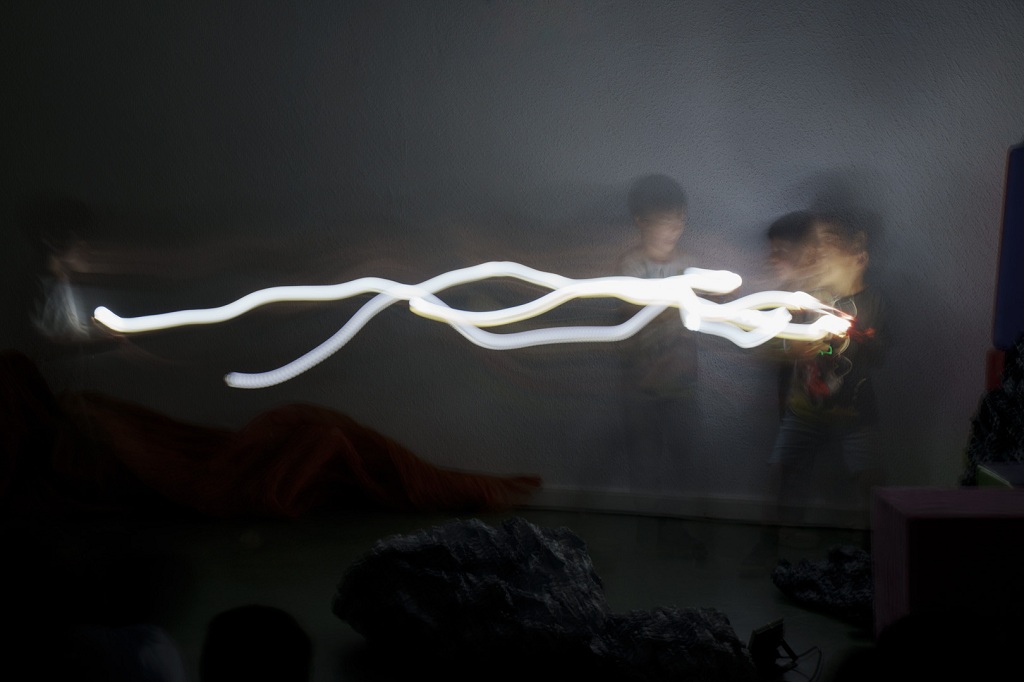
Matinees is an open, flexible space in which cinema expands: the cinematographic experience spills out of the screen and invites your active participation, regardless of your age.

The white cinema screen—that flat, opaque surface—is also a place to plunge into, to dive down to unsuspected depths. It can spill out of the sides, splashing and soaking everything around it, rising up to the ceiling and raining down from above. The images can adopt unimagined forms: unspeakable, immeasurable. We can watch them from a seat, or alternatively lying down, arm in arm, scattered across the room. Even with our eyes closed. We can touch the light, feel its colours, listen to it like a whisper, like a song. And we can do all of this together, in a room with no seats, no tickets and no popcorn. We believe there are many ways to watch cinema that have yet to be discovered. To explore them, we’ve invited various artists and filmmakers to imagine what those ways are and what other type of cinema has yet to be experienced. The Matinees take place on Saturday mornings and each session will be different: a proposal, an experiment, a challenging experience. We invite you to come with your best friends, your siblings, sons, daughters, dads, mums or grandparents and discover cinema like you have never imagined it. You’ll find all the details and session times here very soon, but for now here are the sessions dates and guests.

PROGRAMME 

28 FEBRUARY | MAIDER FERNÁNDEZ IRIARTE

7 MARCH | MARTA AZPARREN IN COLLABORATION WITH TANIA ARIAS WINOGRADOW

14 MARCH | GÉNESIS VALENZUELA AND MANUEL MUÑOZ 

21 MARCH | ANGIE DE LA LAMA

TIMES: 11.30 am** Time subject to change

Everyone is welcome at the Matinees. We want this programme to be a place for sharing, regardless of age. Babies, boys and girls, young people, adults and seniors: come and join us. You’re free to enter and exit the room during the sessions.

Activity type
Dates
SATURDAYS FEBRUARY-MARCH
Target audience
Acceso notas adicionales

AFORO: 60 PERSONAS

Entrance

Matinees is an open, flexible space in which cinema expands: the cinematographic experience spills out of the screen and invites your active participation, regardless of your age.

Categoría cabecera
matinales 2026
MATINEES: EXPANDED CINEMA FOR FAMILIES 2026
More information and contact
Media footer

Picture: Sue Ponce.

Is it a cycle?
Disabled
Duration
4 sessions

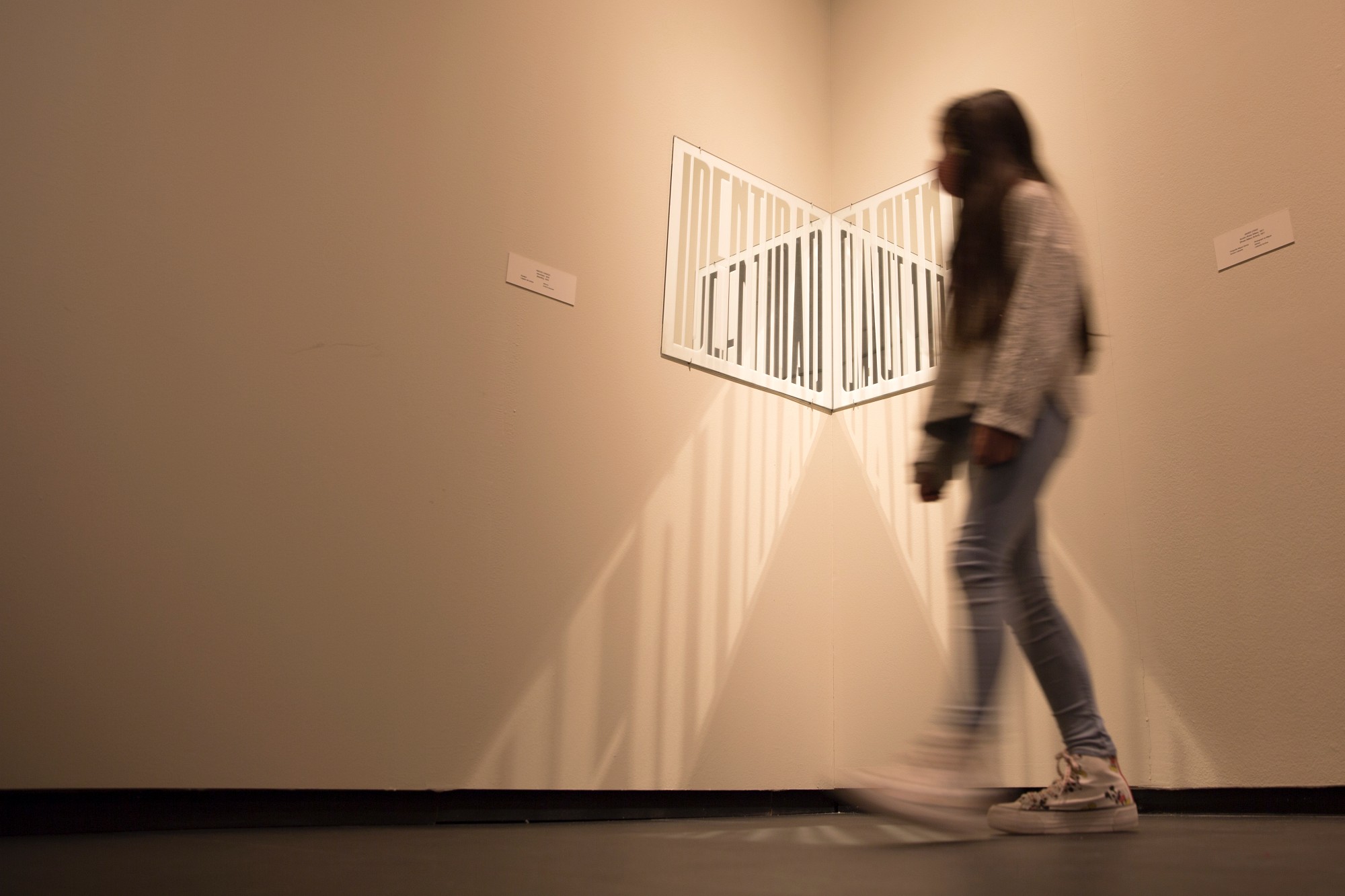
These tours of the Ester Partegàs, Dorothy Iannone and Antonio Ballester Moreno exhibitions don’t seek categorical answers but open up a space where the experiences of visitors, and of groups that now form part of the museum, are put into play and create networks. We want to reflect together on it what means to tour an exhibition using conversation, listening and the difference of gazes.

How does what we see change when we focus on the fragment, the framing or the time we dedicate to a work?
What do we really use when we look at a work?

“What the eye doesn't reveal” proposes a tour where framing, fragment and time are mobilised to provide a deeper insight into Sky and Earth by Antonio Ballester Moreno, Minor Architecture by Ester Partegàs, and Over and Over Again by Dorothy Iannone. Three proposals which, each from a very different place, invite us to think about what falls outside the spotlight, about what is repeated and transformed, and about the intimate, the body and the everyday as territories of meaning.

A space to pause at the details and accept the partial gaze, allowing the works (and other people as well) to interrogate us, disturb us or connect us from unexpected places. A tour where the fragment is not something incomplete but a possibility; where the framing is not a limit but a revelation; and where time is measured not as duration but as intensity of the experience.

The tours will be accompanied by Francisca Soto Martínez (Santiago de Chile, 1989), artist, restorer and educator based in Spain. A member of the El Hueco collective, her work is situated at the intersection between collective memory, community building and cultural mediation, exploring the frictions between art, restoration and education.

Activity for the general public every Sunday at 12.30 pm

  • Maximum capacity: 12 people
  • Advance registration: 91 276 02 21 or ca2m@madrid.org
  • You can also sign up directly at the Museum reception.

Group tours on Wednesday mornings

If you belong to a collective, association, educational establishment or informal group, contact us to arrange a tour by calling 91 276 02 27 or writing to educacion.ca2m@madrid.org

Activity type
Dates
EVERY SUNDAY AT 12:30
Target audience
Acceso notas adicionales

CAPACITY: 12 PEOPLE

Entrance

These tours of the Ester Partegàs, Dorothy Iannone and Antonio Ballester Moreno exhibitions don’t seek categorical answers but open up a space where the experiences of visitors, and of groups that now form part of the museum, are put into play and create networks. We want to reflect together on it what means to tour an exhibition using conversation, listening and the difference of gazes.

Subtitle
TOURS OF THE EXHIBITIONS
Categoría cabecera
visitas domingos
WHAT THE EYE DOESN'T REVEAL
More information and contact
Media footer

Picture: Sue Ponce.

Is it a cycle?
Disabled
Duration
12:30- 14:00

Since 2009 we have been running a performance workshop for teachers, educators and artists interested in education. The week-long activity consists of working with the body to forge collaborative ties and reflect collectively with the Museo CA2M educators, participating teachers and guest artists on educational processes and the performativity of education.

This year we’ve invited the art duo formed by Libia Castro (Spain) and Olafur Olafsson (Iceland), who started their partnership in the Netherlands in 1997. Working with a wide variety of media, their practice is collaborative, conceptual and cross-disciplinary.

The duo’s interventionist projects often involve other people. Over the years, they have teamed up with activist groups and invited other artists, professionals and people from different backgrounds to work with them on art and activism initiatives, creating temporary and flexible collectives governed by a “Do It Together” approach.

They have presented their work on rooftops, in public squares, on building facades, at socio-cultural centres, on radio and television, in living rooms and kitchens. They have also taken part in festivals like the 8th Havana Biennale, Manifesta 7, the 54th Venice Biennale and the 19th Sydney Biennale, and in exhibitions at venues like La Casa Invisible and the Van Abbemuseum. In 2009 they received the third prize of the Dutch Prix de Rome award for their video Lobbysts, and in 2021 they won the Icelandic Art Prize for their polyphonic performance and video In Search of Magic: A Proposal for a New Constitution for The Republic of Iceland.

More details about the workshop will be available here soon.

Previous performance workshops have featured Los Torreznos, Tania Bruguera, Pere Faura, Itziar Okariz, Norberto Llopis, Nilo Gallego, Dora Garcia, Jiri Kovanda, Olga Diego and Jorge Satorre.

Dates
FROM OCTOBER 6 TO 9
Acceso notas adicionales

CAPACITY: 25 PEOPLE

Entrance

Performance workshop for teachers, educators and artists interested in education, lasting one working week, to forge collaborative links and reflect together on educational processes and the performativity of education.

Categoría cabecera
Taller profedorado
PERFORMANCE AND EDUCATION WORKSHOP
More information and contact
Media footer

Picture: Libia Castro and Olafur Olafsson. In Search of Magic - A Proposal for A Constitution of The Republic of Iceland (2020).

Is it a cycle?
Disabled
Duration
17:00 - 20:30

“This year the biological cycle of the group begins with the chrysalis. Each workshop will focus on how we are developing from inside out or vice versa, exploring our resources as we discover them, inhabiting new places and getting ready to make—or already taking—the preliminary leap to our metamorphosis, our flight.

Phase 1: Observation
Phase 2: Experimentation and play
Phase 3: Creation
Phase 4: Breaking everything

Come and join us as we wait, or not, our way.

‘Nails and tacks’ is an activity for young people between ages 13 and 21 who want to discover new practices related to self-publishing and contemporary creation. On Fridays and weekends, we’ll run workshops and meet with artists, exploring our personal universes and searching for new ways of looking at everyday life through art. You can sign up for individual sessions or the whole series. All the sessions will be different.”

Quiosco Clandestino is a collective formed by Angie de la Lama and Leo D’Elio that emerged in 2020 at the height of the pandemic out of a reflection on the cultural circuits to which they both belonged. Its mission is to support artists and people interested in artistic creation while pursuing its own projects associated with self-publishing.

Angie de la Lama specialises in comics, illustration and low-budget film-making. She is also active in the field of cultural management, having created Skisomic Fest, the first fanzine festival in Seville, and film festivals like Euforia and Intima, held in Madrid. She combines her work as an artist and cultural manager with the development of educational projects for different institutions.

Leo D’Elio is an artist and cultural manager from Madrid. Using practices related to self-publishing, such as fanzines, comics and sound experimentation, his work revolves around the personal, everyday life and public space. He is a staunch defender of amateurism and doing things “badly”. He spent his formative years with the Museo CA2M “sub21” youth group and “Duchamp & Sons” of the Whitechapel Gallery in London before creating Quiosco Clandestino and Yina + Eol with Angie in 2020.
 

CALENDAR OF SESSIONS:

10 and 31 October

14 and 28 November 

12 December

Activity type
Dates
Alternate Fridays from October to December
Topics
Entrance

“Come on, let's get together to wait, or not, in our own way. Clavos y chinchetas is an activity aimed at young people aged 13 to 21, where they can discover new ways of working related to desktop publishing and contemporary creation”.

Subtitle
OPEN WORKSHOP FOR YOUNG PEOPLE BETWEEN AGES 13 AND 21
Categoría cabecera
Clavos 2025
NAILS AND TACKS
More information and contact
Media footer

Photo: Sue Ponce

Is it a cycle?
Disabled
Duration
17:30 to19:30

“We’re back. We’re going to continue what we left unfinished and this time transform ourselves. We come as lost Amazons. Echoing in the air are the mythological polyphonies that generate this system of unequal relationships, those voices, symbols and images that don’t represent us. The narrative has been so, so, so successful that we’re still pushing the Boulder.

We wanted to kill the mother but we failed, so now we're going to save her. We might not achieve that goal either, but this time we’ll aim better. Although in our attempts to adapt ancestral myths to the new identities of the twenty-first century we might miss Diana’s mark.

Here, there and everywhere, through the centuries, they've stolen our narrative, even though it was all chaos in the beginning. Our journey has brought us to IthaCA2M. We're going to shut Telemachus’s mouth, we’re going to appropriate mythos for ourselves. Potatoes protest by whistling in the cruelty of the kitchen. Because now we know we’re either mad or bad, really bad or super-bad, or good, really good without nuances, one-dimensional. 

At our next meetings we’ll explore and interrogate the role of myths in every sense and in every aspect. We’ll reflect on the narratives that have shaped the construction of female subjectivity to challenge them and rebel against them. Magicians and priestesses, fiends, old women who used magic potions and spells, frequented cemeteries and could even fly. Persecuted and punished: was the imposed narrative in danger?

For witches Circe and Medea. Men’s fantasies, for good or for bad. Powerful witches, negative models for women’s conduct who also represented the antithesis of the chaste woman. Penelope would weave and un-weave, create and un-create. And so do we. We fall so often into the stereotypes that we hate and envy Helen.

Our Trojan Horse for destroying this imaginary will be literature and art, sister allies, the tools we’ll use to unravel ourselves. We’ll make room for popular traditions, other forms, in truth to explain the same thing. We’ll open Pandora’s box, or just for change we’ll leave Pandora free of boxes. The Apple is very good for whitening your teeth. We’re the mixture, result, product of Celtic, Roman and barbarian lands. Dehumanised, de- and human, perfect and imperfect, although they’ve screwed us alive and even dead. But from the mud new narratives have emerged with different voices and different airs. And we’ll (re-) embrace them to discuss and listen to each other in the midst of sounds, words and silences.”

The Daughters of Jocasta

PS. Jocasta committed suicide whereas Oedipus only gouged out his eyes. How unfair it all is. We put up with so much.

Who are we? The Daughters of Jocasta.

We’re called the Daughters of Jocasta because we like the name, because we’re all daughters, and because Jocasta was the mother (and wife) of Oedipus, who gave her so much pain (and pleasure).

We found the excuse for the name in Christiane Oliver's book The Children of Jocasta and appropriated it. It’s ours.

Four daughters: Rebeca Contador, Sandra Cabrera, Ángela Solano and Ana Isabel Fernández Álvarez.

We're the resistance of the Museo CA2M reading groups. But we've become more than the origin, we have our own voice. United by a love of talking and talking, of always mulling everything over from every angle.


NEXT SESSIONS

30 October

13 and 27 November

18 December

Activity type
Dates
FROM OCTOBER TO JUNE
Target audience
Registration
-
Topics
Entrance

In the upcoming sessions of the Reading Group, we will explore and investigate the role of myths in all their meanings and in all their breadth. We will reflect on those stories that have been decisive in the construction of female subjectivity in order to question them and rebel against them.

Subtitle
READING GROUP
Categoría cabecera
Grupo de lectura
WE LOOK FOR OURSELVES IN THE FOOTPRINTS AND OUR STEPS AREN'T THERE...
More information and contact
Media footer

Image credit: The daughters of Jocasta

Is it a cycle?
Disabled
Duration
THURSDAY 5:00 PM TO 8:00 PM